
What's Happening?
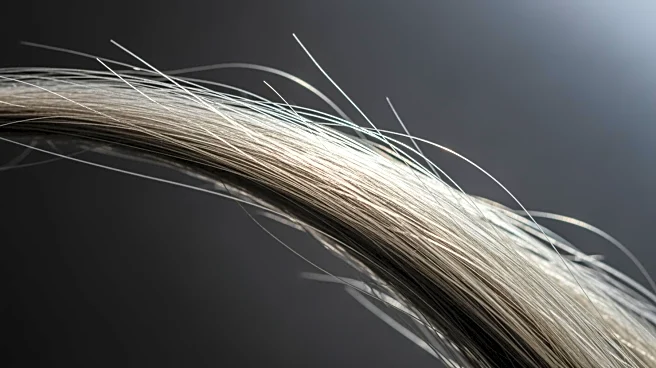
A recent study proposes that graying hair might be an evolutionary defense against cancer. Researchers found that cancer-causing triggers, such as ultraviolet light and certain chemicals, activate a natural
defensive pathway leading to premature graying while reducing cancer incidence. The study tracked stem cells responsible for hair pigment in mice, revealing that these cells respond to DNA damage by ceasing to grow and divide, resulting in gray hair, or by replicating uncontrollably, potentially forming tumors. The findings, published in Nature Cell Biology, highlight the protective mechanisms that emerge with age to defend against DNA damage and disease. The study suggests that graying hair and melanoma are not unrelated but are divergent outcomes of stem cell stress responses.
Why It's Important?
This research provides insight into the biological processes that may protect against cancer, offering potential pathways for developing new cancer prevention strategies. Understanding how stem cells react to DNA damage could lead to advancements in age-related disease therapies, including cancer. The study reframes the perception of hair graying, suggesting it is not merely a cosmetic change but a significant biological response to environmental stressors. This could influence future research on aging and cancer, potentially impacting public health policies and cancer treatment approaches.
What's Next?
The next step involves translating these findings from mice to human hair follicles to determine if similar protective mechanisms occur in humans. This could lead to new research directions in understanding human aging and cancer prevention. Researchers may explore how different environmental stressors affect human stem cells and their role in cancer development. The study opens avenues for further investigation into the relationship between aging, hair pigmentation, and cancer risk.
Beyond the Headlines
The study raises ethical considerations regarding the manipulation of natural aging processes for cancer prevention. It also prompts cultural reflections on the perception of aging and beauty, potentially shifting societal views on gray hair. Long-term, this research could influence how aging is approached in medical and cosmetic industries, emphasizing health benefits over aesthetic concerns.