
What's Happening?
Venezuela's acting President Delcy Rodríguez announced the continuation of releasing prisoners detained under former President Nicolás Maduro's regime. This move comes after Maduro's capture by U.S. forces
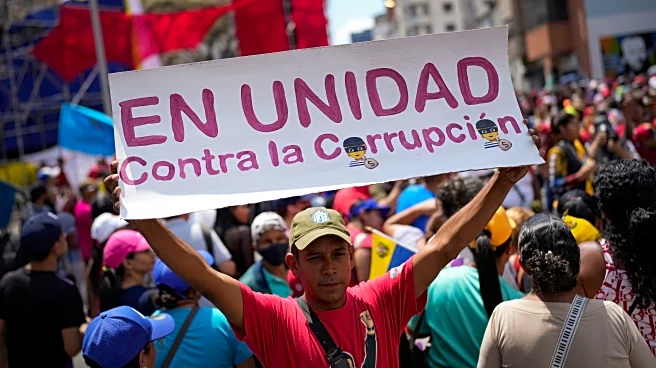
earlier this month. Rodríguez, addressing the media from the presidential palace in Caracas, emphasized a 'new political moment' for Venezuela, aiming to open the country to political and ideological diversity. The release of detainees is reportedly influenced by the Trump administration's directives. Human rights organizations estimate around 800 political prisoners remain, including political leaders and civil society members. President Trump confirmed a 'great conversation' with Rodríguez, indicating positive relations between the U.S. and Venezuela. Despite the ongoing releases, Rodríguez criticized organizations advocating for prisoners' rights, asserting strict law enforcement and continuity from Maduro's initial prisoner releases.
Why It's Important?
The release of political prisoners in Venezuela marks a significant shift in the country's political landscape, potentially easing tensions with the United States. This development could lead to improved diplomatic relations and economic opportunities, as Venezuela seeks to stabilize its political environment. The move also highlights the influence of U.S. foreign policy in shaping Venezuela's internal affairs. However, the situation remains complex, with ongoing criticism from human rights groups regarding the pace and transparency of the releases. The outcome of these actions could impact Venezuela's international standing and its citizens' human rights.
What's Next?
The continuation of prisoner releases is expected, with potential implications for Venezuela's political dynamics. The international community, particularly the U.S., will likely monitor these developments closely. President Trump's engagement with Rodríguez suggests further diplomatic interactions, possibly influencing Venezuela's governance and economic policies. The response from opposition leaders and civil society groups will be crucial in shaping the country's future political landscape. Additionally, the handling of remaining political prisoners will be a key factor in assessing Venezuela's commitment to human rights and democratic reforms.