
What's Happening?
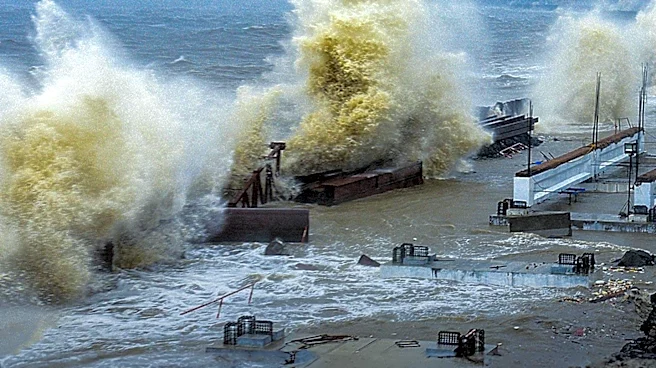
Authorities in eastern China have taken precautionary measures as Typhoon Dolphin approaches the coast. The storm, with maximum sustained winds of approximately 162 kilometers per hour (101 mph), is expected
to bring heavy rains, posing risks of severe flooding and landslides. The typhoon is projected to impact Zhejiang province and northern parts of Fujian province by late Sunday, with Shanghai also in its path. In response, a level III emergency response has been declared, which is the second lowest level of alert. Tourist destinations in Zhejiang have been closed for the weekend, and all water-based activities, including ferries and cruises, have been suspended. In Ningbo, one of the largest cities in the province, schools and educational facilities have been ordered to close over the weekend.
Why It's Important?
The impending arrival of Typhoon Dolphin highlights the vulnerability of coastal regions in China to severe weather events. The precautionary measures taken by authorities aim to mitigate the potential impact on human life and infrastructure. The closure of schools and tourist sites, along with the suspension of water-based activities, reflects the seriousness of the threat posed by the typhoon. Such natural disasters can have significant economic implications, disrupting local economies, particularly in tourism-dependent areas. The response to Typhoon Dolphin also underscores the importance of emergency preparedness and the ability of local governments to mobilize resources quickly to protect citizens and minimize damage.