









What's Happening?
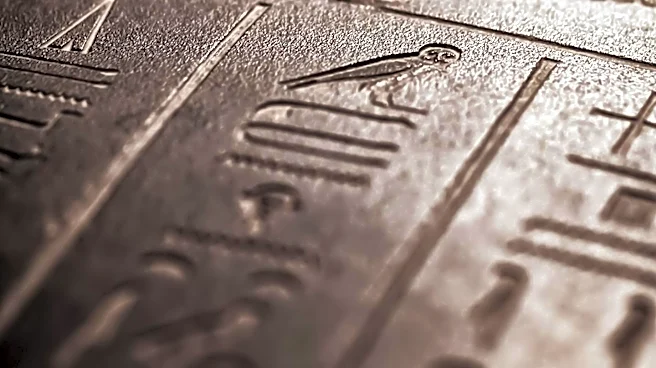
Researchers at Germany's Heidelberg University have deciphered an 1800-year-old Roman curse tablet, revealing a multicultural group curse inscribed on its surface. The tablet, discovered by Dutch archaeologists in Heerlen, Netherlands, dates back to the 2nd
century and is made of lead, a material favored by Latin and Greek occultists for its 'binding' properties. The curse includes three magical symbols and names of four slaves, two in Latin and two in Greek, suggesting a blend of cultural influences. The tablet's inscription, possibly authored by one of the named women, reflects the integration of Near Eastern, Egyptian, Jewish, and Christian traditions within the Roman Empire. The tablet will soon be displayed at the Heerlen Museum.
Why It's Important?
The discovery of this curse tablet provides significant insights into the cultural and religious dynamics of the Roman Empire. It highlights the blending of various traditions and the role of magic in Roman religious life. The use of both Latin and Greek languages on the tablet underscores the multicultural interactions within the empire. This finding contributes to the understanding of how different cultural practices and beliefs were integrated and adapted in ancient societies. It also sheds light on the social status and roles of slaves in Roman times, as well as the use of curses as a means of addressing personal grievances or conflicts.