
What's Happening?
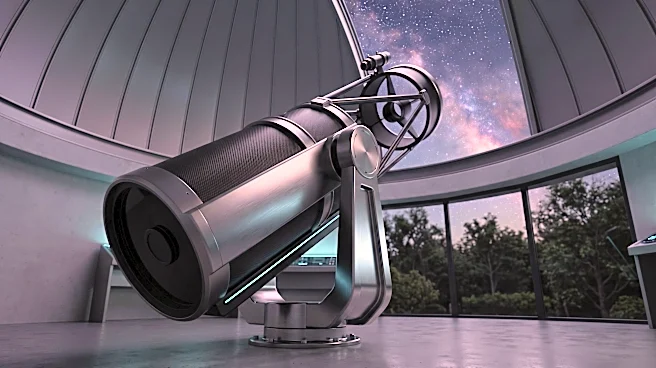
The Anne H. Cruickshank Observatory has officially opened in Aberdeen, marking the city's first new observatory in over 200 years. Located in the Cruickshank Botanic Garden, the facility houses a 16-inch
John Cruickshank telescope equipped with advanced imaging technology. Dr. Charles Wang, an astrophysicist at the University of Aberdeen and project lead, highlighted the observatory's unique AI control system. This system allows for both the roof and telescope to be operated using AI voice commands, enabling users to simply request observation of celestial objects. The AI can also suggest interesting objects to observe based on current conditions. The observatory is designed to support teaching and research in astrophysics, as well as interdisciplinary work involving artificial intelligence and data science. Additionally, it aims to create new opportunities for schools, community groups, and the public to engage with astronomy. The facility's weather station monitors conditions like wind speed, humidity, and atmospheric pressure, while infrared technology and light pollution sensors help determine optimal observation times. The project was primarily funded through donations, including the Miss Anne H. Cruickshank’s Special Trust and the Dr. C Allan Young and Mrs. Norma Young Fund.
Why It's Important?
The opening of the Anne H. Cruickshank Observatory signifies a significant advancement in astronomical research and public engagement in the region. Its integration of AI technology makes complex astronomical observation more accessible, potentially democratizing access to scientific exploration for individuals without extensive prior experience. This accessibility can foster a new generation of scientists and enthusiasts, broadening the talent pool in STEM fields. For the University of Aberdeen, the observatory enhances its capabilities in astrophysics and data science, positioning it as a hub for cutting-edge research and interdisciplinary collaboration. The focus on AI and data science within an astronomical context could lead to innovative breakthroughs in how celestial data is collected, analyzed, and understood. Furthermore, the observatory's commitment to community outreach, including schools and public groups, is crucial for science communication and inspiring public interest in space and technology. This initiative could also boost local tourism and educational programs, contributing to the regional economy and cultural landscape.
What's Next?
The Anne H. Cruickshank Observatory is expected to immediately begin supporting teaching and research activities at the University of Aberdeen. Its AI-controlled telescope will be utilized for advanced astrophysical studies and interdisciplinary projects, particularly those involving artificial intelligence and data science. The observatory will also roll out programs for schools and community groups, offering hands-on experiences with astronomy and advanced technology. Professor Catherine Heymans, Astronomer Royal for Scotland and the first Patron of Science and Engagement for the Aberdeen Science Centre, will leverage her network and expertise to raise the profile of the center and maximize the impact of its work, which will likely include promoting the new observatory. Future developments may involve expanding public access programs and potentially integrating with other national or international astronomical networks to enhance research capabilities and data sharing. The observatory's unique AI features could also serve as a model for future astronomical facilities, influencing the design and operation of observatories globally.
Beyond the Headlines
The establishment of an AI-controlled observatory like the Anne H. Cruickshank Observatory represents a broader trend in scientific research towards automation and intelligent systems. This development raises important questions about the evolving role of human expertise in scientific observation and discovery. While AI enhances accessibility and efficiency, it also prompts discussions on the balance between automated data collection and human interpretation, and the potential for AI to uncover patterns or anomalies that human observers might miss. The observatory's dual focus on research and public engagement highlights the increasing importance of making complex scientific endeavors understandable and relatable to the general public. This initiative could serve as a blueprint for other institutions looking to bridge the gap between advanced scientific research and community involvement, fostering a more scientifically literate society. Moreover, the long-term impact on scientific education could be profound, as students gain early exposure to advanced AI and astronomical tools, potentially shaping their career paths and contributing to future innovations in these fields.