



What's Happening?
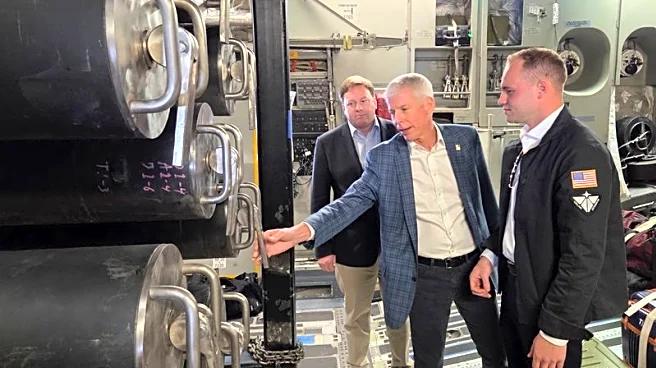
In a groundbreaking operation named 'Operation Windlord,' the United States Air Force (USAF) has successfully transported a micro nuclear reactor from March Air Reserve Base in California to Hill Air Force Base in Utah. This marks the first time a nuclear reactor has been
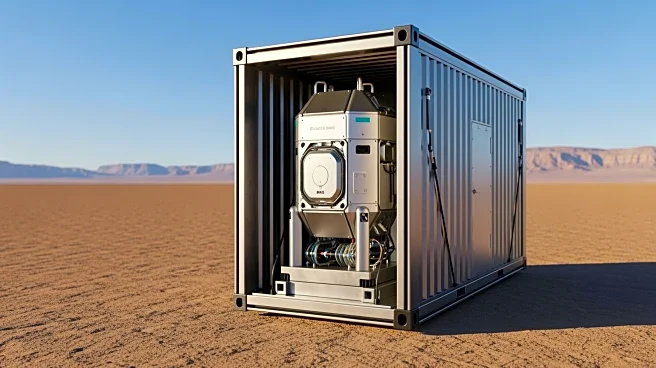
moved via a C-17 Globemaster III aircraft. The reactor, known as the Ward250 and developed by Valar Atomics, will undergo extensive testing at the Utah San Rafael Energy Lab (USREL) in Orangeville, Utah. This initiative is part of the U.S. Department of Energy's Nuclear Reactor Pilot Program, which was established following an executive order by President Trump. The program aims to advance nuclear technology for both commercial and military applications, enhancing energy resilience and strategic independence for U.S. defense installations.
Why It's Important?
The transportation and testing of the Ward250 reactor represent a significant step towards achieving energy resilience and independence for U.S. military installations. As the demand for electricity grows, particularly with the rise of energy-intensive industries like artificial intelligence, the need for reliable and scalable power sources becomes critical. The integration of micro nuclear reactors into military bases could reduce reliance on vulnerable local power grids, providing a stable energy supply for critical operations. This development also aligns with broader efforts to revitalize the U.S. nuclear energy sector, positioning it as a strategic asset in the face of global competition, particularly with China. The successful deployment of such technology could pave the way for a new era of American energy dominance.
What's Next?
Following the successful airlift, the Ward250 reactor will undergo rigorous testing at USREL to evaluate its performance and safety. If successful, this could lead to the deployment of similar reactors across other military installations, both domestically and potentially overseas. The Department of Energy and the Department of Defense are likely to continue collaborating on advancing nuclear technology, with potential commercial applications also being explored. This initiative could also influence future energy policies and investments, as the U.S. seeks to enhance its energy infrastructure and reduce dependency on foreign energy sources.
Beyond the Headlines
The use of micro nuclear reactors raises important considerations regarding safety, security, and environmental impact. While these reactors promise enhanced energy efficiency and reliability, ensuring their safe operation and handling remains a priority. The potential for widespread adoption of such technology could also lead to shifts in energy policy and public perception of nuclear power. As the U.S. military and energy sectors explore these advancements, balancing innovation with safety and environmental stewardship will be crucial.