





What's Happening?
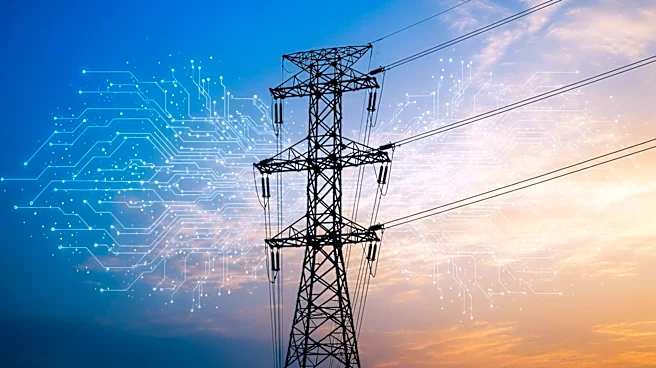
The U.S. energy grid is facing significant challenges as it struggles to meet the demands of modern technology and infrastructure. Despite having a generation capacity of 1,250 GW, the grid's ability to deliver electricity efficiently is hampered by outdated
systems. The American Society of Civil Engineers has given the U.S. grid infrastructure a D+ grade, highlighting the need for modernization. The industry is expected to invest $1.4 trillion over the next five years to support the artificial intelligence boom, but experts argue that simply adding more generation capacity will not solve the underlying issues of stability and distribution. The current grid, designed for 20th-century demands, is ill-equipped to handle the rapid load swings required by modern technology, such as AI data centers.
Why It's Important?
The challenges facing the U.S. grid have significant implications for the country's economic and technological future. As industries increasingly rely on AI and other advanced technologies, the demand for stable and reliable electricity will only grow. The current grid's inability to meet these demands could hinder economic growth and technological advancement. Additionally, the reliance on outdated infrastructure poses risks to national security and public safety, as seen in recent power outages. The need for a modernized grid that can handle 21st-century demands is critical to ensuring the U.S. remains competitive in the global market.
What's Next?
To address these challenges, the U.S. must invest in modernizing its grid infrastructure. This includes developing systems that can handle rapid load changes and integrating renewable energy sources to improve stability. Policymakers and industry leaders must collaborate to create a comprehensive plan that addresses both short-term and long-term needs. Additionally, there is a need for increased investment in research and development to explore innovative solutions for grid modernization. As the demand for electricity continues to rise, the U.S. must prioritize upgrading its infrastructure to ensure a reliable and efficient energy supply.