






What's Happening?
A special counsel team in South Korea, led by Lee Myeong-hyeon, has requested a one-year prison sentence for Oh Dong-woon, the chief prosecutor of the Corruption Investigation Office for High-ranking Officials (CIO). The request was made during the final
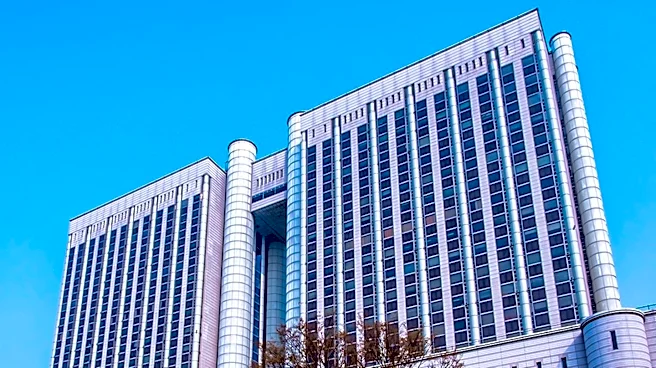
hearing of Oh's trial at the Seoul Central District Court. Oh Dong-woon is accused of dereliction of duty for allegedly attempting to obstruct an investigation into Song Chang-jin, a former senior CIO prosecutor. The accusation stems from a criminal complaint filed by opposition Democratic Party of Korea (DPK) lawmakers in August 2024 against Song, who was accused of perjury at the National Assembly regarding a high-profile investigation into the death of a Marine in 2023. Oh allegedly failed to transfer this complaint to the Supreme Prosecutors Office for 11 months, a step required by law, leading the special counsel team to believe he knowingly tried to bury the investigation.
Why It's Important?
This case highlights significant concerns regarding the integrity and independence of anti-corruption efforts within South Korea's government. The CIO, established to investigate high-ranking officials, is now facing scrutiny over its own chief prosecutor's conduct. A conviction and prison sentence for Oh Dong-woon could severely undermine public trust in the institution designed to combat corruption at the highest levels. It also underscores the political tensions and power dynamics at play, with opposition lawmakers initiating the complaint that led to this special counsel investigation. The outcome of this trial could set a precedent for how allegations of obstruction of justice are handled within South Korea's legal and political landscape, potentially influencing future accountability measures for government officials.
What's Next?
The Seoul Central District Court will now deliberate on the special counsel's request for a one-year prison term for Oh Dong-woon. The court's decision will determine the immediate future of the CIO chief and could have broader implications for the agency's credibility. The case also brings attention to the ongoing investigation into Song Chang-jin, the former senior CIO prosecutor, and the underlying issue of perjury allegations related to the Marine's death investigation. The legal proceedings are likely to continue to be closely watched by political parties and the public, given the high-profile nature of the individuals and institutions involved. The final verdict will be a critical moment for South Korea's anti-corruption framework.
Beyond the Headlines
The legal proceedings against Oh Dong-woon extend beyond a simple case of dereliction of duty; they touch upon the delicate balance of power and accountability within South Korea's political system. The CIO was created to be an independent body, yet this case suggests potential vulnerabilities to political influence or internal misconduct. The allegations of obstructing an investigation into a subordinate, particularly one linked to a sensitive issue like the death of a Marine, could erode public confidence in the government's commitment to transparency and justice. This situation may prompt calls for reforms to strengthen the independence and oversight mechanisms of anti-corruption agencies, ensuring they are truly impervious to internal or external pressures. The case also reflects the broader struggle in many democracies to maintain robust checks and balances against potential abuses of power by those in authority.