





What's Happening?
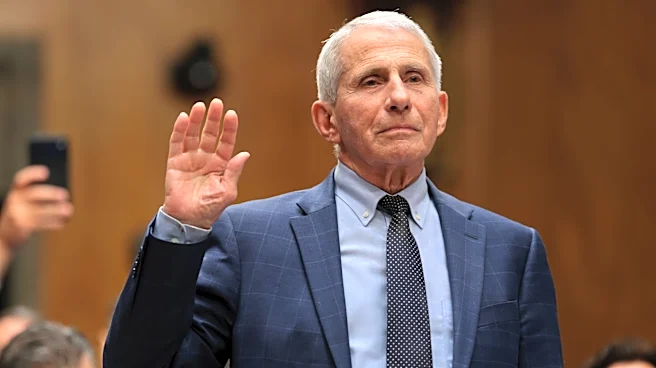
David Morens, a former adviser to infectious disease expert Anthony Fauci, pleaded guilty on Tuesday to a conspiracy charge in federal court in Greenbelt, Maryland. The charge relates to his involvement in a scheme to evade public records laws and conceal
government documents concerning grant research funding and the COVID-19 pandemic. Morens, who served as a senior official at the National Institute of Allergy and Infectious Diseases (NIAID) during the pandemic, was indicted in April. Prosecutors stated that the scheme aimed to thwart public records requests received by the agency starting in April 2020, specifically those related to COVID-19 research grants. Morens and others allegedly used personal email accounts instead of government ones to communicate, anticipating that their official communications would be subject to Freedom of Information Act requests. He faces a potential sentence of up to five years in prison, with sentencing scheduled for November 12.
Why It's Important?
This plea highlights ongoing scrutiny into the transparency and accountability of government officials during public health crises. The use of personal email accounts to circumvent public records laws raises concerns about the public's right to information and the integrity of government operations. The case also touches upon the contentious debate surrounding the origins of COVID-19, as Morens's plea is linked to the National Institutes of Health's decision to cancel a bat coronavirus research grant amid allegations that COVID-19 originated from the Wuhan lab. While the FBI and CIA have offered differing assessments on the lab leak theory, the unresolved nature of COVID-19's origins continues to fuel public interest and calls for transparency. This development could influence future policies regarding communication protocols for government employees and the handling of sensitive research grants, particularly those with international implications.
What's Next?
David Morens is scheduled for sentencing on November 12, where he faces up to five years in prison. His lawyer, Timothy Belevetz, stated that Morens has taken responsibility for his actions and will continue to do so. This case may prompt further investigations or reviews into the communication practices of government agencies, especially concerning sensitive public health matters and research funding. The outcome of Morens's sentencing could also set a precedent for how similar cases involving government transparency and public records are handled in the future. Additionally, the ongoing debate about the origins of COVID-19, which was a backdrop to Morens's actions, is likely to continue, potentially leading to further calls for transparency from various stakeholders.
Beyond the Headlines
The plea by a former adviser to Anthony Fauci underscores a broader tension between government transparency and the perceived need for discretion in sensitive scientific and political matters. The use of personal email to avoid public records requests raises ethical questions about accountability and the potential for undue influence or concealment of information. This incident could erode public trust in government institutions and scientific bodies, particularly given the highly politicized nature of the COVID-19 pandemic and its origins. It also highlights the challenges of maintaining transparency in an era where digital communication methods offer numerous ways to bypass official channels. The case may lead to a re-evaluation of existing Freedom of Information Act regulations and their enforcement, potentially resulting in stricter guidelines for government employees' communications and record-keeping practices.