







What's Happening?
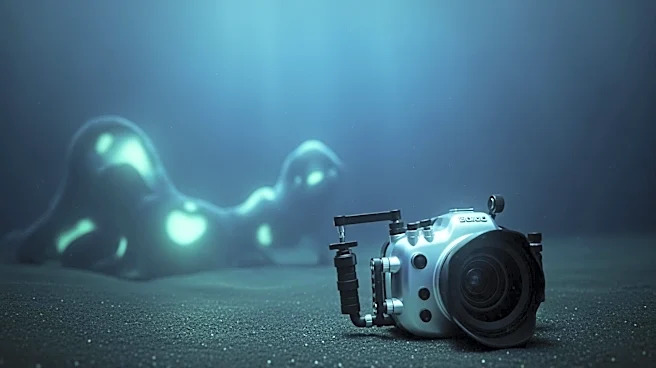
A YouTuber named Barney Dillarstone has captured footage of rare and unusual deep-sea creatures by deploying a night-vision camera 700 feet below the ocean surface near Nusa Penida Island, Indonesia. Known locally as Black Magic Island, this area revealed
a variety of marine life, including houndsharks, moray eels, and giant stingrays. Dillarstone's exploration aims to discover new species by dropping cameras into deep ocean locations worldwide. His recent expedition provided what might be the first footage of a particular shark species alive in the wild. The footage highlights the presence of a giant stingaree, a type of stingray, noted for its size and strength, capable of crushing hard-shelled prey.
Why It's Important?
This exploration underscores the vast unknowns of the deep ocean and the potential for discovering new species. The findings contribute to marine biology by providing visual evidence of rarely seen creatures, enhancing scientific understanding of deep-sea ecosystems. Such discoveries can inform conservation efforts, as understanding species diversity and behavior is crucial for protecting marine environments. The footage also raises public awareness about oceanic biodiversity, potentially influencing environmental policies and encouraging further scientific exploration.
What's Next?
Dillarstone plans to continue his global underwater explorations, aiming to uncover more unknown species. His work may inspire other researchers and enthusiasts to explore uncharted ocean depths, potentially leading to new scientific discoveries. The footage could prompt further studies by marine biologists to verify and analyze the species captured on camera. Additionally, the public interest generated by such discoveries might lead to increased support for ocean conservation initiatives.
Beyond the Headlines
The ethical implications of deep-sea exploration include the potential disturbance of marine habitats and the need for responsible research practices. As technology enables deeper and more frequent explorations, balancing scientific curiosity with environmental stewardship becomes crucial. The cultural fascination with 'real-life monsters' also reflects humanity's enduring intrigue with the unknown, driving both scientific inquiry and public engagement with marine life.