


What's Happening?
The Israeli military has announced the recovery of the remains of Ran Gvili, the last hostage held in Gaza, marking a significant step in the ongoing ceasefire process between Israel and Hamas. Gvili, a police officer, was killed during a Hamas-led attack
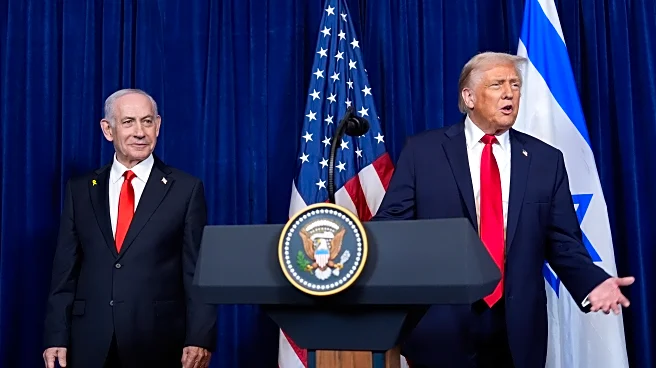
on October 7, 2023, which initiated the conflict. His remains were found in a cemetery in northern Gaza, following a large-scale operation by the Israeli military. Prime Minister Benjamin Netanyahu hailed the recovery as an 'incredible achievement,' emphasizing the importance of bringing all hostages home. The return of hostages, both living and deceased, has been a critical component of the ceasefire's first phase. With Gvili's remains recovered, Israel plans to open the Rafah crossing between Gaza and Egypt, a vital passage for Palestinians. The next phase of the ceasefire will address more complex issues, including the disarmament of Hamas and the establishment of a new governance structure in Gaza.
Why It's Important?
The recovery of Gvili's remains is pivotal in advancing the ceasefire between Israel and Hamas, potentially leading to a more stable and peaceful situation in the region. The opening of the Rafah crossing is expected to facilitate humanitarian aid and medical evacuations, significantly impacting the lives of Palestinians in Gaza. This development also underscores the delicate balance of power and the ongoing negotiations required to maintain peace. The successful recovery operation may bolster Israel's position in future negotiations, while the commitment to the ceasefire terms by Hamas could lead to a reduction in hostilities. The broader implications include potential shifts in regional alliances and the role of international mediators, such as the United States, in maintaining the ceasefire.
What's Next?
With the first phase of the ceasefire completed, the focus will shift to the second phase, which involves disarming Hamas and transitioning to a new governance structure in Gaza. This phase is expected to be more challenging, requiring significant diplomatic efforts and international support. The opening of the Rafah crossing will be closely monitored, as it is a critical lifeline for Gaza's residents. The international community, including the United States, will likely continue to play a crucial role in mediating and ensuring compliance with the ceasefire terms. Additionally, the Israeli Supreme Court is considering a petition to allow journalists independent access to Gaza, which could influence public perception and transparency in the region.