



What's Happening?
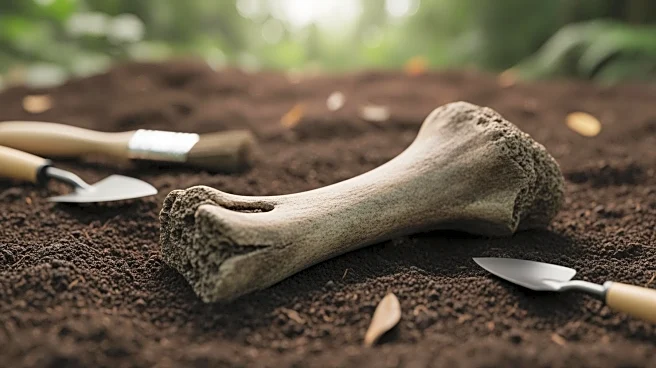
A 5,500-year-old human skeleton discovered in Colombia has provided the oldest evidence yet that the bacterium causing syphilis, Treponema pallidum, existed in the Americas long before European contact. The genetic analysis of the skeleton revealed a previously
unknown strain of the bacterium, suggesting that Treponema diseases were present in the Americas thousands of years earlier than previously thought. This finding challenges earlier theories that syphilis was brought to the Americas by European explorers or vice versa. The study, published in the journal Science, highlights the complex evolutionary history of treponemal diseases and their long-standing presence in the Americas.
Why It's Important?
This discovery has significant implications for understanding the history and spread of infectious diseases. By pushing back the timeline of Treponema pallidum's presence in the Americas, the study provides new insights into the evolution and transmission of syphilis and related diseases. This could influence current public health strategies by offering a deeper understanding of the pathogen's history and its potential future behavior. The research also underscores the importance of paleogenomics in uncovering the origins of diseases, which can inform modern medical practices and help prevent future outbreaks. The findings contribute to the ongoing debate about the geographical origins of syphilis and its impact on global health.