









What's Happening?
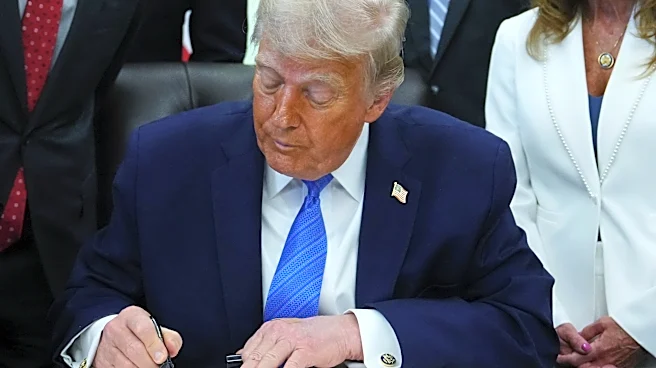
President Trump announced the cancellation of planned U.S. strikes on Iran, citing a breakthrough in negotiations with Tehran and regional governments. However, Iran's Fars News Agency reported that Tehran has not approved any memorandum of understanding
with the U.S. The discussions reportedly reached the highest levels of Iranian leadership, involving multiple countries such as Israel, Saudi Arabia, and the UAE. Despite the diplomatic progress, the U.S. naval blockade of Iran remains in effect until the agreement is finalized. The situation remains fluid, with potential for both diplomatic resolution and military escalation.
Why It's Important?
This development highlights the fragile nature of U.S.-Iran relations and the complexities of Middle Eastern geopolitics. The potential agreement could ease tensions and stabilize the region, impacting global oil markets and international security. However, the lack of final approval from Iran raises questions about the durability of the negotiations. The situation underscores the challenges of achieving lasting peace in a region marked by historical conflicts and strategic rivalries.
What's Next?
The focus will be on securing a formal agreement and lifting the naval blockade. The international community will watch closely for Iran's response and any shifts in regional alliances. The outcome could influence future U.S. foreign policy and its approach to conflict resolution in the Middle East. Stakeholders will need to navigate complex diplomatic landscapes to achieve a sustainable resolution.