
What's Happening?
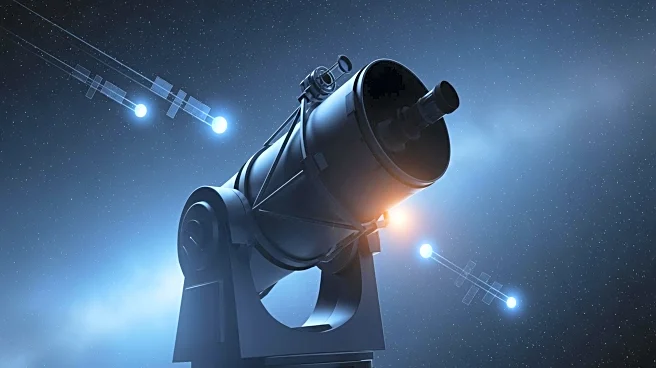
NASA researchers have raised concerns about the impact of SpaceX's Starlink satellites on astronomical observations. A study led by Spanish astrophysicist Alejandro Serrano Borlaff indicates that light
pollution from these satellites could contaminate one out of every three images captured by the Hubble Space Telescope. SpaceX, which has permission from the US Federal Communications Commission to launch 12,000 satellites, plans to increase this number significantly. The study suggests that future space telescopes, such as the European Space Agency's ARRAKIHS and NASA's SPHEREx, could experience even higher rates of image contamination. The research highlights the need for international regulatory measures to mitigate the impact of satellite constellations on space-based astronomy.
Why It's Important?
The proliferation of satellites in low Earth orbit poses a significant threat to astronomical research, potentially compromising the quality of data collected by space telescopes. This could hinder scientific discoveries and advancements in understanding the universe. The issue underscores the need for international cooperation to regulate satellite launches and protect the integrity of space-based observations. The outcome of this situation could affect the future of space exploration and the ability of scientists to conduct research without interference from commercial satellite operations.
What's Next?
Efforts to address the issue of satellite-induced light pollution will require collaboration among international space agencies and regulatory bodies. Potential solutions could involve setting limits on the number of satellites launched or developing technologies to minimize their impact on astronomical observations. The scientific community may advocate for stricter regulations to ensure that future space missions are not compromised by commercial activities in low Earth orbit.