







What's Happening?
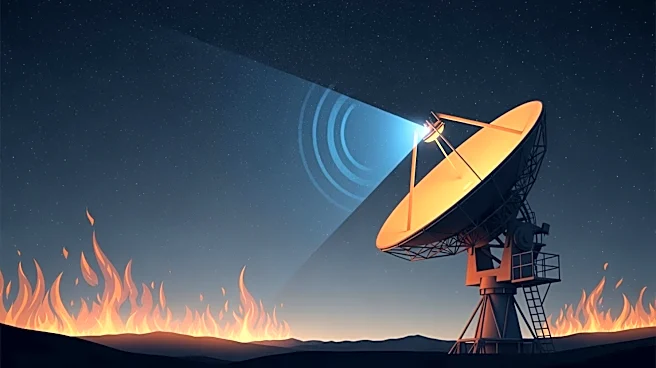
A Texas agency is among the first to test a new satellite technology aimed at improving wildfire detection and response. The Earth Fire Alliance, in partnership with Muon Space and Google, has launched FireSat, a fleet of satellites designed to provide
real-time data on wildfires. The initiative aims to have over 50 satellites in orbit by 2030, capable of detecting low-intensity fires and scanning fire-prone regions every 20 minutes. This technology is expected to enhance the ability of emergency responders to make informed decisions quickly, especially in fast-moving fire situations exacerbated by drought conditions. Texas A&M Forest Service is an early adopter of this technology, which is also being tested in California, Oregon, Australia, and Portugal.
Why It's Important?
The implementation of FireSat technology represents a significant advancement in wildfire management, particularly in regions like Texas that experience frequent and intense wildfires. By providing real-time data, the satellites can help emergency responders make quicker and more informed decisions, potentially saving lives and reducing property damage. The ability to detect fires as small as a classroom and monitor their progression could lead to improved mitigation and prevention strategies. This technology supports existing methods of wildfire detection and suppression, offering a complementary tool that enhances overall preparedness and response capabilities.
What's Next?
As the FireSat system becomes fully operational, it is expected to provide unprecedented levels of detail in wildfire monitoring. The data collected will be used to refine fire behavior and prediction models, allowing agencies like the Texas A&M Forest Service to anticipate fire impacts and make better-informed decisions. The ongoing feedback from early adopters will be crucial in improving the system's effectiveness. The success of this initiative could lead to broader adoption of satellite technology in wildfire management globally, setting a new standard for emergency response.