




What's Happening?
Finance ministers from the Group of Seven (G7) developed economies are set to meet in Paris to discuss the economic repercussions of the ongoing conflict in the Middle East, particularly the closure of the Strait of Hormuz. Eurogroup President Kyriakos
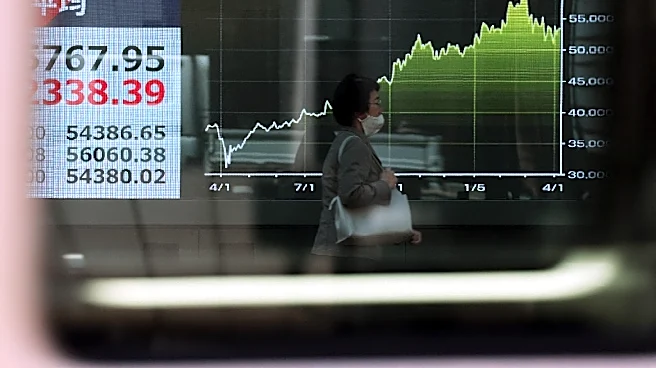
Pierrakakis emphasized the critical need to reopen the strait to mitigate economic impacts. The Eurogroup, which includes ministers from the euro area, is represented by Pierrakakis, who is also the Greek finance minister. The G7, comprising the U.S., U.K., Canada, France, Germany, Italy, and Japan, is concerned about rising inflation and energy supply disruptions due to the conflict. U.S. Treasury yields have spiked, with the 30-year bond yield reaching 5.121%, the highest since May 2025, as investors react to inflation data and anticipate interest rate policies under new Federal Reserve Chair Kevin Warsh.
Why It's Important?
The closure of the Strait of Hormuz, a vital passage for global oil and gas supplies, has significant implications for the global economy. The G7 meeting underscores the interconnectedness of global markets and the potential for external shocks to disrupt economic stability. Rising inflation and energy supply constraints are pressing concerns for G7 economies, which could lead to increased borrowing costs and economic slowdowns. The situation highlights the vulnerability of economies to geopolitical tensions and the importance of coordinated international responses to mitigate such risks. The outcome of the G7 meeting could influence future economic policies and strategies to address similar crises.
What's Next?
The G7 finance ministers are expected to discuss strategies to stabilize energy markets and address inflationary pressures. Potential outcomes include coordinated efforts to reopen the Strait of Hormuz and diplomatic initiatives to resolve the conflict. The meeting may also result in policy recommendations to enhance economic resilience against geopolitical disruptions. Stakeholders, including governments and financial markets, will closely monitor the discussions for signals on future economic policies and potential impacts on global trade and investment.