





What's Happening?
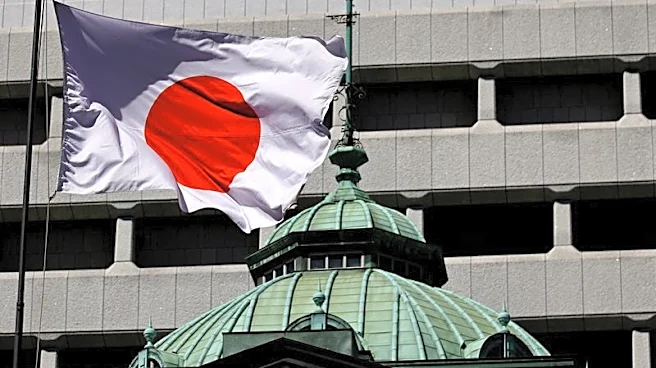
Japan has announced a $10 billion financial support package aimed at assisting Southeast Asian economies in coping with the oil supply shock resulting from the ongoing conflict in the Middle East. This package will be disbursed through the Japan Bank
for International Cooperation and other financial institutions. The region has been severely affected by the collapse of crude supply, leading to fuel shortages and rising prices. The Philippines, heavily reliant on Middle Eastern oil, declared a national energy emergency in March as fuel prices doubled. Japan, which also depends significantly on Middle Eastern oil, has begun releasing oil stocks from its national reserves to mitigate the impact.
Why It's Important?
The economic slowdown in Southeast Asia due to the oil supply disruption has significant implications for the region's stability and growth. The financial aid from Japan is crucial as it provides immediate relief to countries struggling with energy shortages and inflation. This move also underscores Japan's strategic interest in maintaining stability in Southeast Asia, a key region for its economic and geopolitical interests. The aid package could help stabilize fuel prices and prevent further economic deterioration, benefiting both Southeast Asian countries and Japan by ensuring continued trade and economic cooperation.
What's Next?
Japan's financial support is expected to be unveiled at an online summit of the Asia Zero Emission Community plus, which includes ASEAN member states. The aid will likely prompt other nations to consider similar support measures to stabilize the region. Southeast Asian countries may continue to implement measures such as reducing work weeks and encouraging remote work to conserve energy. The ongoing situation may also lead to increased regional cooperation in energy security and diversification of energy sources to reduce reliance on Middle Eastern oil.