





What's Happening?
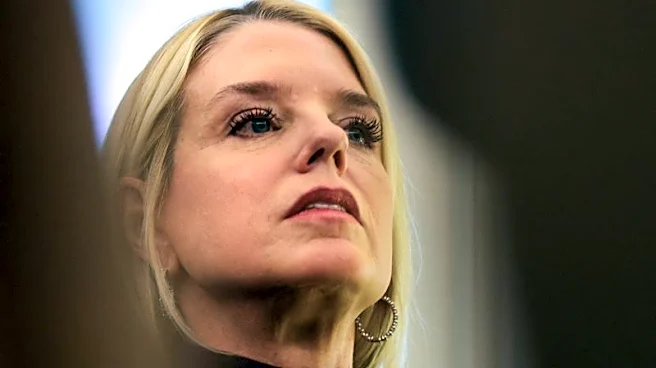
The Department of Justice (DOJ) has announced that Pam Bondi, former Attorney General, is no longer required to testify about her handling of files related to Jeffrey Epstein. This decision follows her dismissal by President Trump on April 2. The DOJ's
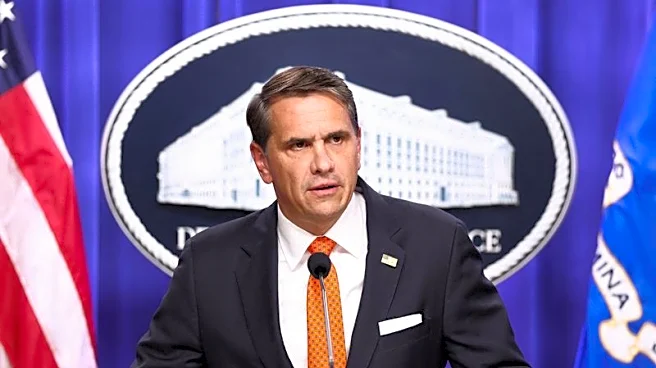
Assistant Attorney General Patrick Davis informed the House Oversight Committee that Bondi is not bound by the subpoena since she is no longer in office. This development has caused frustration among lawmakers who are seeking transparency regarding the Epstein Files Transparency Act. The GOP-led House Oversight Committee plans to contact Bondi's legal team to discuss a possible deposition.
Why It's Important?
The DOJ's decision to withdraw the subpoena raises questions about accountability and transparency in the investigation of the Epstein case. Lawmakers from both parties are concerned about the DOJ's compliance with the Epstein Files Transparency Act, which aims to provide clarity on the handling of Epstein-related documents. The situation highlights the challenges in holding former officials accountable and ensuring that justice is served for Epstein's victims. The outcome of this case could influence future legislative efforts to improve transparency and accountability in high-profile investigations.
What's Next?
The House Oversight Committee may continue to pursue Bondi's testimony through other legal avenues, potentially leading to further legal battles. Lawmakers could also push for additional legislative measures to ensure compliance with transparency laws. The DOJ's handling of this case may come under increased scrutiny, prompting calls for reforms in how subpoenas are enforced for former officials. The ongoing investigation into the Epstein files will likely remain a point of contention in Congress, with potential implications for future oversight of similar cases.