



What's Happening?
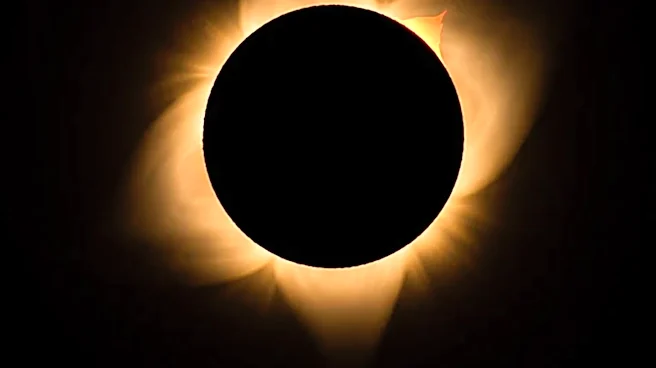
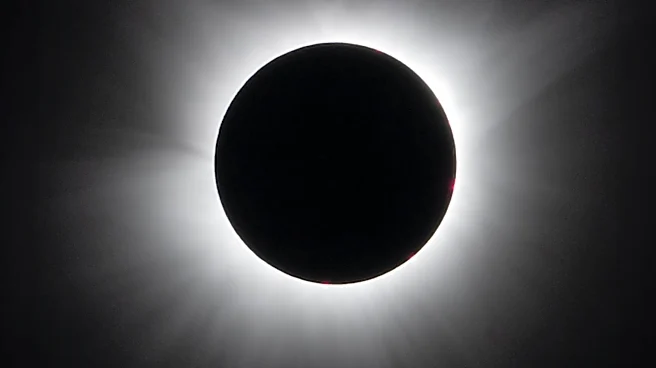
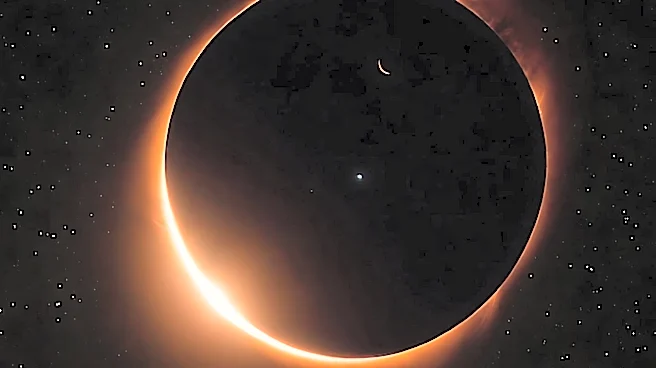
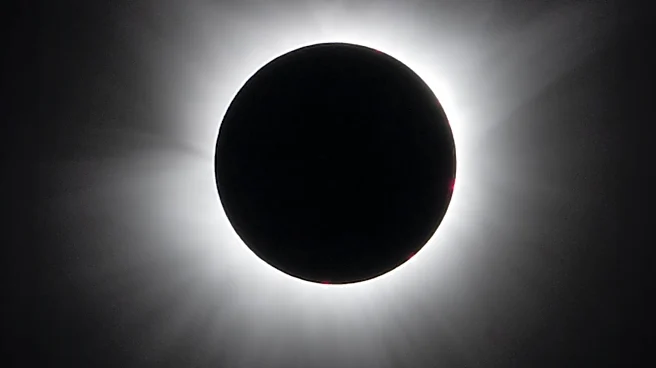
On August 12, a total solar eclipse will provide a rare opportunity to observe the sun's corona, the outer atmosphere, which is usually obscured by the sun's bright light. This event is significant for eclipse chasers and scientists alike, as the corona's
appearance changes with the sun's magnetic activity. The eclipse will occur during the declining phase of Solar Cycle 25, offering a unique snapshot of the sun's magnetic field and solar activity. Observers in regions such as Greenland, Iceland, and parts of Spain will have the best views of this celestial event.
Why It's Important?
Total solar eclipses offer valuable insights into solar physics and the sun's magnetic field, which can impact space weather and technological systems on Earth. The corona's structure during the eclipse will reflect the sun's current magnetic activity, providing data that can enhance our understanding of solar cycles and their effects on Earth's climate and satellite operations. This event also highlights the cultural and scientific significance of eclipses, drawing attention to the importance of astronomical research and public engagement in science.
What's Next?
Following the eclipse, scientists will analyze data collected during the event to study the sun's corona and its magnetic field. This research could lead to improved models for predicting solar activity and its impact on space weather. Additionally, the eclipse may inspire further public interest in astronomy and space science, potentially leading to increased support for educational and research initiatives. Future eclipses will continue to provide opportunities for scientific discovery and public engagement, fostering a deeper appreciation for the complexities of our solar system.