


What's Happening?
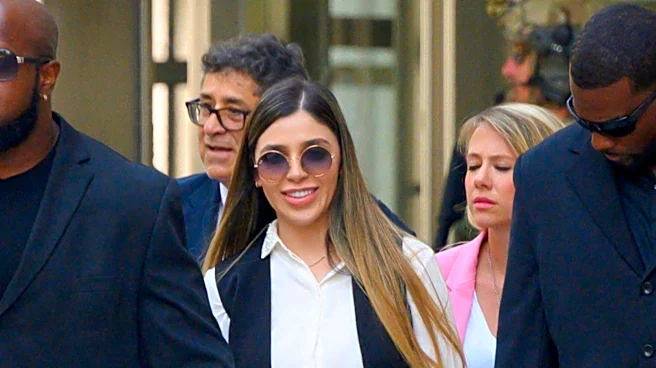
Emma Coronel, wife of Joaquín 'El Chapo' Guzmán, has publicly confirmed that their twin daughters maintain regular and close communication with their father, despite his life sentence in a maximum-security U.S. prison. Speaking during a live broadcast
on the digital platform Kick, Coronel addressed public speculation about her personal life and emphasized the strong paternal bond. She stated that the girls, Emaly Guadalupe and María Joaquina, born in California in 2011, frequently see and speak with Guzmán. Coronel also used the platform to ask her followers to disregard unsubstantiated information circulating in media and social networks regarding her family. She expressed satisfaction with the stability of their father-daughter relationship, highlighting its importance to her and her children. The birth of the twins in the U.S. was a deliberate choice by Coronel, who is a U.S. citizen, to ensure their American citizenship.
Why It's Important?
This revelation offers a rare glimpse into the personal life of a high-profile incarcerated figure and his family, impacting public perception of the U.S. penal system's allowance for family contact. For the U.S., it underscores the complexities of managing inmates with significant public and criminal histories, balancing security with humanitarian considerations for family ties. The fact that Guzmán's daughters are U.S. citizens also highlights the transnational nature of such cases and the legal frameworks that apply. The continued communication could be seen by some as a testament to the enduring family unit despite extreme circumstances, while others might view it critically given Guzmán's criminal past. It also brings attention to the role of digital platforms in disseminating personal information from individuals connected to major criminal cases, influencing public discourse and potentially shaping narratives around justice and family.
What's Next?
Emma Coronel is expected to continue using her public platform to manage the narrative surrounding her family, potentially influencing public opinion and media coverage. The ongoing communication between Guzmán and his daughters, facilitated by prison regulations, will likely remain a point of interest, though unlikely to change his incarceration status. The focus will likely shift to how the daughters' U.S. citizenship and their connection to a notorious figure might influence their future, particularly as they grow older. Any further public statements from Coronel or her family will be closely watched for additional insights into Guzmán's life in prison or the family's future plans. The U.S. Bureau of Prisons will continue to manage Guzmán's incarceration under strict protocols, with family visits and communications adhering to established guidelines.
Beyond the Headlines
The story touches on deeper themes of family resilience, identity, and the long-term consequences of criminal actions on subsequent generations. The daughters, as U.S. citizens with a notorious father, face unique challenges regarding their identity and public perception. This situation raises questions about the ethical implications of media coverage on the children of high-profile criminals and their right to privacy. It also subtly highlights the reach of U.S. legal jurisdiction, as the children's American citizenship was a deliberate choice. The narrative also reflects the evolving role of social media and digital platforms in allowing individuals connected to major news events to control their own stories, bypassing traditional media filters. This personal account humanizes a figure often portrayed solely through his criminal enterprise, adding a layer of complexity to the public's understanding of such individuals.