

What's Happening?
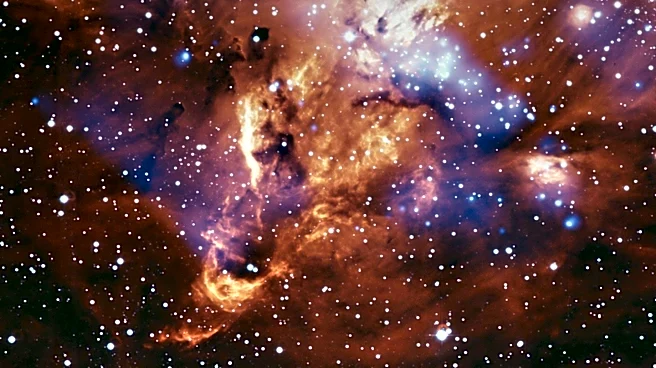
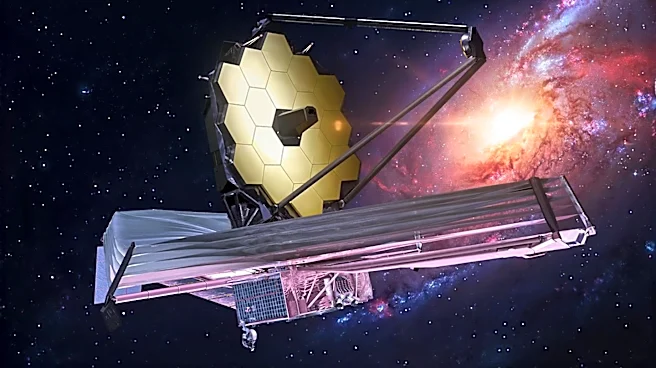
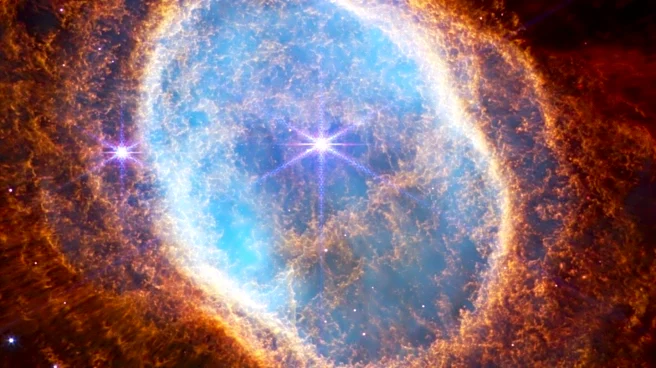
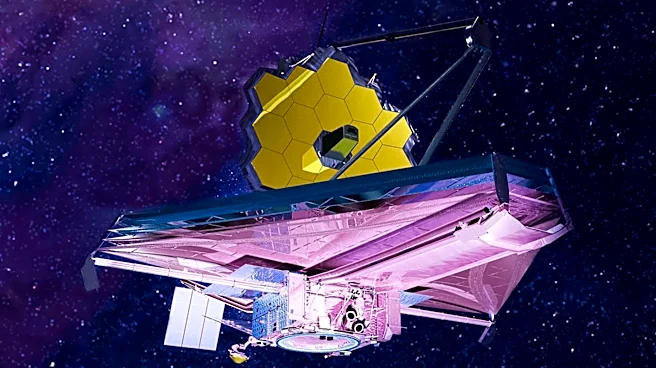
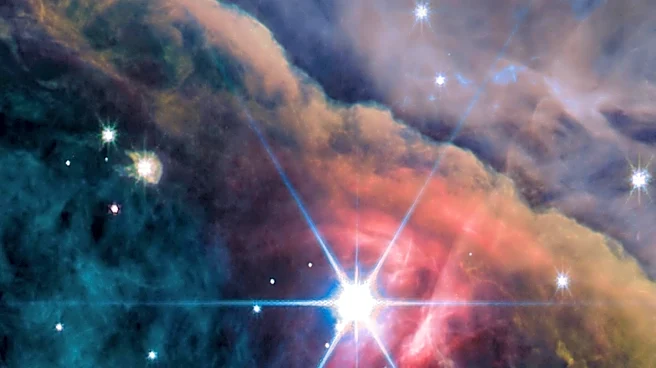
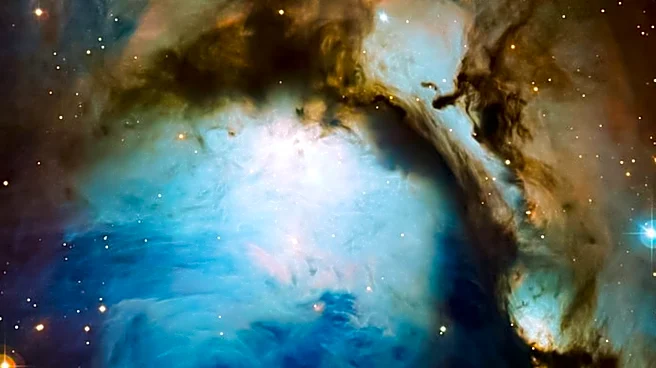
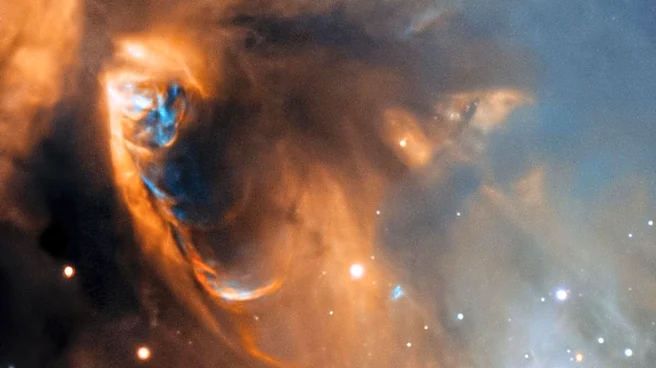
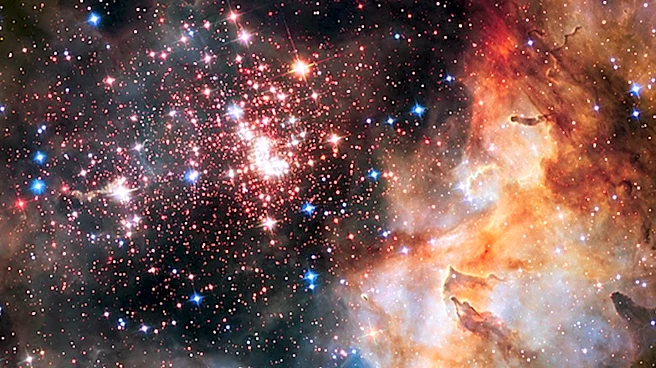
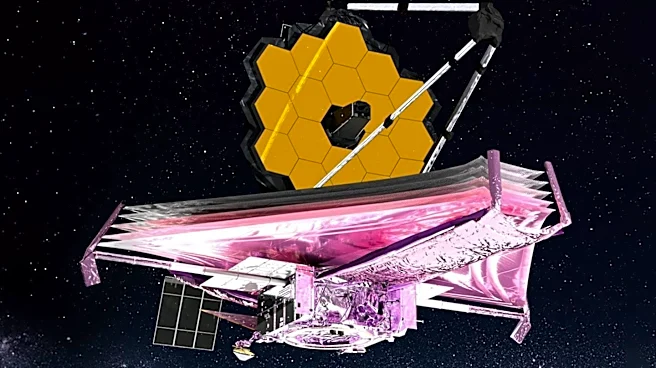
The James Webb Space Telescope, a collaboration between NASA, ESA, and CSA, has captured new high-resolution images of the Lion Nebula (NGC 2392). This planetary nebula, previously imaged by the Hubble Space Telescope in 2000, is now seen in greater detail
thanks to Webb's infrared capabilities. The images reveal intricate structures of compact dust clumps and ionized gas, shaped by the energy of a central white dwarf star. The nebula's distinctive appearance, resembling a lion's face, is formed by a bubble of ionized gas and a surrounding dust shell. The nebula continues to evolve as its gas and dust are influenced by the dying star at its center.
Why It's Important?
The new images from the James Webb Space Telescope provide astronomers with valuable insights into the life cycle of stars and the formation of planetary nebulae. By studying the Lion Nebula's complex structures, scientists can better understand the processes that occur as stars die and shed their outer layers. This research contributes to the broader field of astrophysics, enhancing our knowledge of stellar evolution and the dynamics of cosmic dust and gas. The Webb Telescope's advanced imaging capabilities allow for unprecedented observations, pushing the boundaries of what is known about the universe.
Beyond the Headlines
The detailed study of the Lion Nebula also has implications for understanding the broader cosmic environment. The interactions between the nebula's dust and gas can inform models of how such materials contribute to the formation of new stars and planets. Additionally, the Webb Telescope's ability to capture high-resolution images in infrared light opens new avenues for exploring other celestial phenomena, potentially leading to discoveries that could reshape our understanding of the cosmos.