



What's Happening?
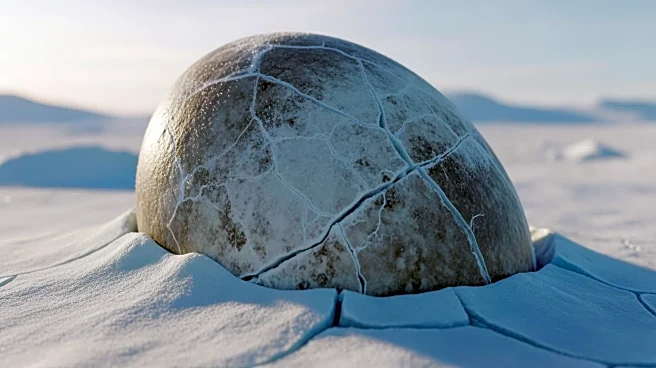
Paleontologists have uncovered a 68-million-year-old fossil egg in Antarctica, nicknamed 'The Thing,' which has provided new insights into the reproductive strategies of ancient marine reptiles. The egg, measuring 11 inches long and 8 inches wide, is the largest
soft-shelled egg ever found and the second largest egg from any animal. This discovery challenges the previous belief that large marine reptiles, such as mosasaurs, gave birth to live young. Instead, the thin, flexible shell of the egg suggests that these reptiles laid soft-shelled eggs in the water, with the young hatching almost immediately. The egg was found near bones of Kaikaifilu hervei, a large mosasaur species, suggesting a possible link between the two.
Why It's Important?
This discovery is significant as it reshapes the understanding of reproductive strategies among ancient marine reptiles. The finding suggests that some marine reptiles may have used a mixed reproductive approach, carrying young almost to term before releasing an egg that hatched quickly in the water. This challenges the long-held view that hard-shelled eggs were the ancestral pattern for reptiles. The preservation of the egg in Antarctic sediment provides a rare glimpse into the life cycles of these ancient creatures and highlights the unique environmental conditions of Antarctica during the Late Cretaceous period.
What's Next?
Further research is likely to focus on confirming the link between the egg and Kaikaifilu hervei, as well as exploring the implications of this discovery for understanding the evolution of reproductive strategies in marine reptiles. Scientists may also investigate other fossil sites in Antarctica to uncover additional evidence of soft-shelled eggs and their role in the reproductive strategies of ancient marine reptiles.
Beyond the Headlines
The discovery of this fossil egg in Antarctica also raises questions about the environmental conditions that allowed for its preservation. The warmer climate and ice-free coasts of Antarctica during the Late Cretaceous period may have contributed to the rapid burial and preservation of the egg. This finding adds to the growing body of evidence that soft-shelled eggs were more common among ancient reptiles than previously thought, potentially leading to a reevaluation of the evolutionary history of reptile reproduction.