




What's Happening?
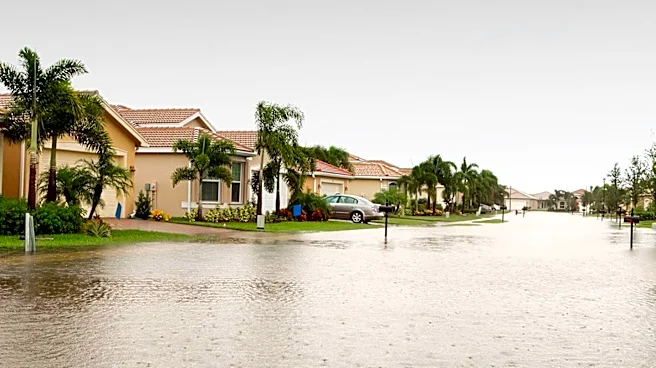
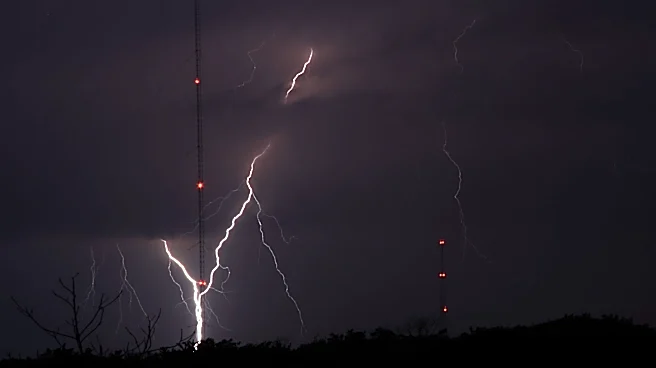
Severe storms on Saturday led to significant flash flooding across New York and New Jersey. The intense weather conditions resulted in widespread disruptions, affecting transportation and daily activities in the region. CBS News New York's Vanessa Murdock
and Naomi Ruchim reported on the situation, highlighting the challenges faced by residents and emergency services. The storms brought heavy rainfall, overwhelming drainage systems and causing water to accumulate rapidly in low-lying areas. This led to road closures and delays in public transportation, as authorities worked to manage the impact and ensure public safety.
Why It's Important?
The flash flooding in New York and New Jersey underscores the vulnerability of urban areas to extreme weather events, which are becoming more frequent due to climate change. The incident highlights the need for improved infrastructure and emergency preparedness to mitigate the effects of such natural disasters. The flooding not only disrupts daily life but also poses significant risks to public safety and property. It serves as a reminder of the importance of investing in resilient infrastructure and effective emergency response systems to protect communities from the increasing threat of severe weather.
What's Next?
In the aftermath of the flooding, local authorities are likely to assess the damage and evaluate the effectiveness of their response strategies. This may lead to discussions on infrastructure improvements and the implementation of more robust flood management systems. Residents and businesses affected by the flooding will need support in recovery efforts, which could involve financial assistance and community aid programs. Additionally, the event may prompt policymakers to prioritize climate adaptation measures to better prepare for future weather-related challenges.
Beyond the Headlines
The flash flooding incident also raises questions about urban planning and the capacity of existing infrastructure to handle extreme weather. As cities continue to grow, the pressure on drainage systems and other critical infrastructure increases, necessitating a reevaluation of urban development strategies. This event could spark broader discussions on sustainable city planning and the integration of green infrastructure solutions, such as permeable pavements and green roofs, to enhance urban resilience against climate impacts.