



What's Happening?
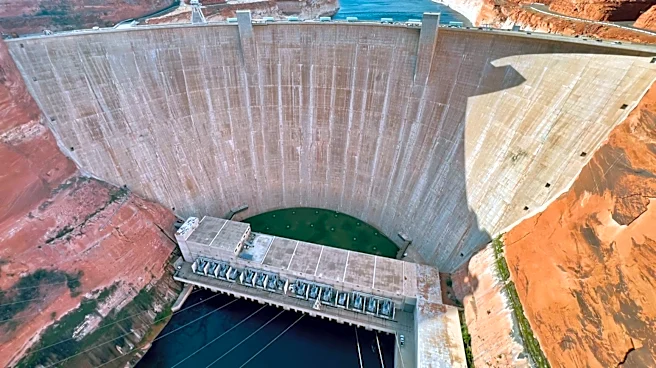
The US government has introduced a proposal to significantly reduce water supplies from the Colorado River to Arizona, California, and Nevada by up to 40%. This plan comes as the river's reservoirs reach critically low levels due to prolonged drought
conditions. The proposal, shared by Tom Buschatzke, director of the Arizona Department of Water Resources, outlines potential cuts of up to 3 million acre-feet annually, which could affect water supply to millions of households. The reductions would be assessed every two years and could be implemented under existing Colorado River law or through state agreements. The 1922 Colorado River Compact prioritizes California for water use, which could influence the distribution of cuts. The plan follows a missed deadline by the seven states reliant on the river to agree on water cut allocations, prompting federal intervention.
Why It's Important?
The proposed water cuts are significant as they could impact the water supply for approximately 40 million people in the American West. The reductions could lead to severe water shortages, affecting agriculture, industry, and residential water use in the affected states. Arizona, California, and Nevada, which are already experiencing water scarcity, may face increased pressure to find alternative water sources or implement conservation measures. The proposal highlights the ongoing challenges of managing water resources in the face of climate change and prolonged droughts. It also underscores the need for collaborative solutions among states to address water scarcity and ensure sustainable water management.
What's Next?
The proposal is set to be finalized in June, with the potential for implementation under existing laws or new agreements among the states. The affected states may need to negotiate further to reach a consensus on water distribution and conservation strategies. The US Bureau of Reclamation is evaluating the risks and benefits of the proposed cuts and may play a role in managing the dispute. Stakeholders, including state governments and water agencies, will likely engage in discussions to mitigate the impact of the proposed reductions and explore alternative water management solutions.