




What's Happening?
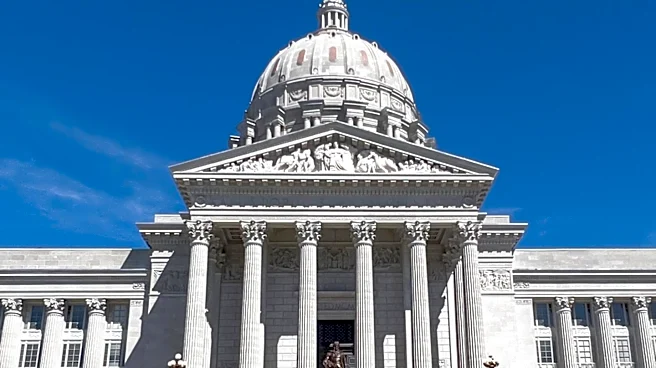
Missouri is preparing for another significant electoral battle over abortion rights, as state lawmakers have placed Amendment 3 on the upcoming November general election ballot. This new amendment seeks to repeal the provisions of the Right to Reproductive
Freedom Initiative (RRFI), which was approved by Missouri voters in 2024. The RRFI, a citizen-initiated petition, was a direct response to the U.S. Supreme Court's 2022 decision in Dobbs v. Jackson Women's Health Organization, which overturned Roe v. Wade and led Missouri to enact a near-total abortion ban in June 2022. The 2024 RRFI passed narrowly with 1,538,659 votes, representing 51.6% of the total, despite a statewide trend of electing Republicans, including President Trump winning the state by 18 percentage points. The proposed Amendment 3 would ban abortions except in cases of medical emergency, fetal anomaly, or rape/incest during the first trimester. It also includes prohibitions on gender transition surgeries and certain puberty-blocking drugs for minors.
Why It's Important?
This ballot measure represents a direct challenge to the will of Missouri voters expressed in 2024 and highlights the ongoing, deeply contentious nature of abortion access in the United States post-Roe v. Wade. If Amendment 3 passes, it would significantly restrict abortion access beyond what voters previously approved, forcing many Missourians to continue traveling out of state for care, as exemplified by the experience of Erika, an anonymous abortion patient who had to seek treatment in Washington, D.C. The financial implications are also substantial, with millions of dollars already flowing into campaigns both supporting and opposing Amendment 3. The debate also touches on the role of citizen-initiated petitions versus legislative action in shaping state law, particularly on highly sensitive issues. The outcome will set a precedent for how states navigate voter-approved measures when legislative bodies disagree, reflecting a broader national struggle over reproductive rights.
What's Next?
The focus now shifts to the November 3 general election, where Missourians will vote on Amendment 3. Campaign funding is expected to intensify, with significant donations from both in-state and out-of-state sources. The Her Health, Her Future PAC, spearheaded by first lady Claudia Kehoe, supports the repeal, while Stop the Ban, a prominent anti-Amendment 3 committee, has already reported more than $3.6 million in funding, significantly outpacing its opposition. Both sides anticipate high voter turnout, potentially exceeding that of the 2024 election, as the issue remains highly polarizing. The outcome will determine the future of abortion access and related healthcare provisions in Missouri, potentially leading to further legal challenges regardless of the result and continuing the state's role as a battleground for reproductive rights.
Beyond the Headlines
The ongoing legislative and electoral battles in Missouri reflect a broader national struggle over reproductive rights and bodily autonomy following the Dobbs decision. The inclusion of prohibitions on gender transition surgeries and puberty-blocking drugs for minors within Amendment 3 also signals an expansion of the legislative focus beyond abortion to other aspects of reproductive and gender-affirming healthcare. This intertwining of issues could further polarize the debate and mobilize different advocacy groups. The narrative of 'outside influences' in campaign funding, as raised by Her Health, Her Future PAC regarding a large donation from Michael Bloomberg, underscores the national interest and financial investment in state-level abortion policy, transforming local elections into proxy battles for national ideological divides and highlighting the complex funding landscape of such campaigns.