








What's Happening?
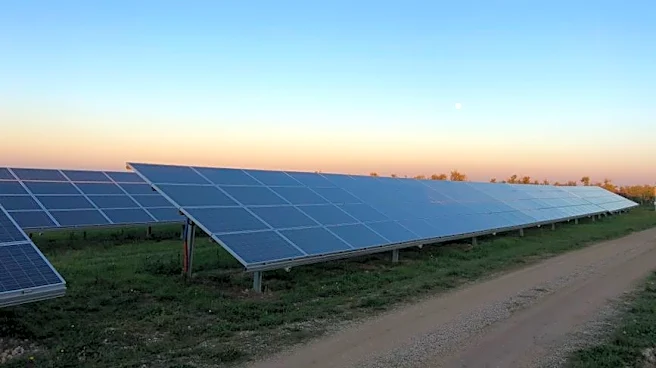
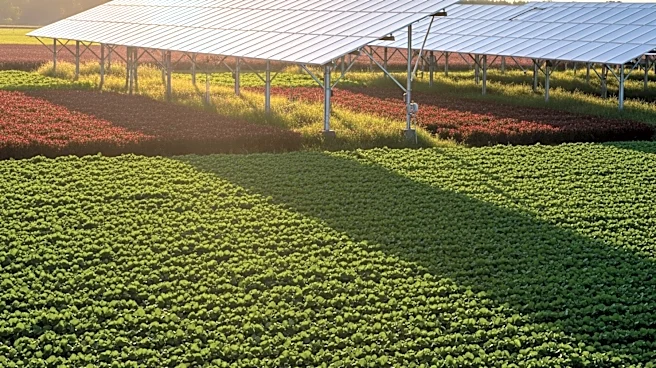
Agrivoltaics is emerging as a promising solution for sustainable agriculture by integrating solar panels with agricultural production. This innovative approach allows for dual land use, where solar panels provide shade to crops, protecting them from extreme
weather and preventing light saturation, while the crops help keep the panels cool, enhancing their efficiency. This symbiotic relationship not only boosts agricultural yields but also contributes to renewable energy production. The excess energy generated can be stored or fed into the grid, reducing reliance on fossil fuels and lowering greenhouse gas emissions. The U.S. Department of Energy projects that solar energy could increase from 4% to 40% of the U.S. electrical supply by 2035, with agrivoltaics playing a significant role. Policies across various states, including Colorado and New York, are promoting research and implementation of agrivoltaics, highlighting its potential as a key component of future sustainable agriculture.
Why It's Important?
The integration of agrivoltaics addresses critical challenges in agriculture and energy sectors by optimizing land use and enhancing resource efficiency. As global populations grow, the demand for food and energy intensifies, making sustainable solutions like agrivoltaics essential. This approach not only supports agricultural economies by protecting crops but also contributes to climate resilience by reducing carbon footprints. The potential increase in solar energy's share of the U.S. electrical supply underscores the importance of renewable energy in achieving sustainability goals. Agrivoltaics also promotes water conservation, a crucial factor in regions facing water scarcity. By fostering a win-win scenario for agriculture and energy, agrivoltaics could significantly impact U.S. policies and practices, driving innovation and sustainability in these sectors.
What's Next?
The future of agrivoltaics looks promising, with increasing awareness and policy support likely to drive further adoption and innovation. Challenges such as high initial costs and the need for adaptation among farmworkers remain, but ongoing research and technological advancements could mitigate these issues. As more states implement supportive policies, agrivoltaics could become a standard practice, enhancing both agricultural productivity and renewable energy capacity. Stakeholders, including policymakers, farmers, and energy companies, are expected to collaborate to overcome barriers and maximize the benefits of this technology. The continued growth of agrivoltaics could lead to significant shifts in land use and energy production, contributing to broader environmental and economic goals.
Beyond the Headlines
Agrivoltaics represents a shift towards more integrated and sustainable land management practices, with potential implications for food security, energy independence, and climate change mitigation. By aligning agricultural and energy production, this approach challenges traditional land use paradigms and encourages innovative thinking in resource management. The ethical and cultural dimensions of agrivoltaics, such as its impact on rural communities and traditional farming practices, warrant consideration as the technology becomes more widespread. Long-term, agrivoltaics could influence global agricultural and energy policies, setting a precedent for other countries to follow in their sustainability efforts.