
What's Happening?
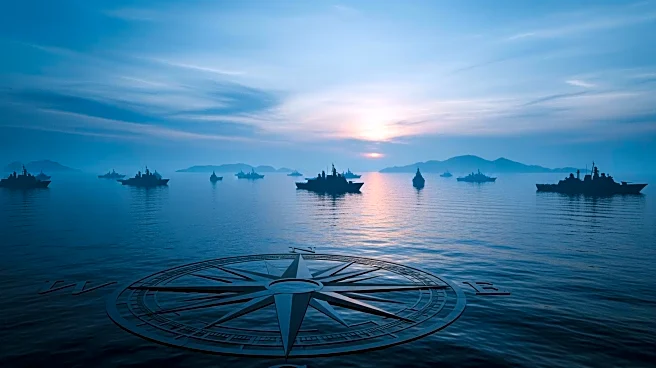
China has been expanding its naval presence in the western Pacific, deploying multiple groups of warships, including amphibious assault ships and aircraft carriers. This move is part of China's strategy
to assert its influence in the region. The Chinese Foreign Ministry insists that these operations comply with international law, urging other nations not to overreact. Satellite imagery has tracked several Chinese naval vessels, including the CNS Liaoning and CNS Shandong, operating in strategic areas such as the South China Sea and the Philippine Sea. These developments have raised alarms among U.S. allies, who fear that China might use its naval power to alter the status quo in disputed waters.
Why It's Important?
The expansion of China's naval capabilities poses a strategic challenge to the United States and its allies in the Pacific. With the world's largest navy by hull count, China is capable of projecting power far beyond its shores, potentially using its naval forces as a tool of coercion in diplomatic disputes. This development could lead to increased military tensions in the region, affecting international trade routes and regional security dynamics. The U.S. and its allies may need to bolster their own naval presence and strengthen military alliances to counterbalance China's growing influence.
What's Next?
China is expected to continue its naval expansion, potentially conducting joint operations with its aircraft carriers to demonstrate military might. The U.S. and its allies will likely monitor these developments closely, possibly increasing their own military activities in the region. Diplomatic efforts may intensify to address the strategic competition between China and the U.S., with potential implications for regional security and international relations.