





What's Happening?
UL Research Institutes’ Chemical Insights, in collaboration with the International Facility Management Association, has released a report titled 'The Heat Inside: Why Extreme Heat is Becoming a Critical Facility Management Risk.' The study investigates
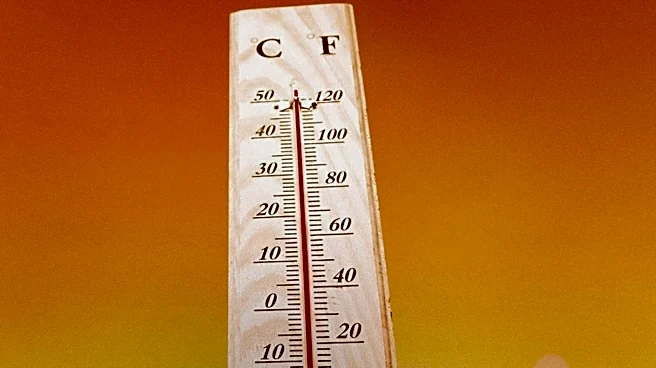
how extreme heat affects indoor air quality, the performance of building materials, occupant well-being, and business continuity. Scientists tested common ceiling, wall, and floor materials at both a standard room temperature of 73°F (23°C) and an elevated temperature of 95°F (35°C). The findings indicate that all tested materials, whether natural or synthetic, emitted volatile organic compounds (VOCs), with total VOC and aldehyde concentrations generally higher at the elevated temperature. Notably, some chemicals, such as benzophenone and neodecanoic acid in resilient flooring, were detected exclusively at 95°F. The report highlights that 'low-VOC' claims on products can be misleading, as they do not always reflect overall VOC emissions, and existing certifications often test materials at a single temperature and humidity point.
Why It's Important?
This report is crucial for U.S. facility managers and building occupants, as extreme heat days and longer heat waves are becoming more frequent. With people spending approximately 90% of their time indoors, the increased emission of VOCs from building materials at higher temperatures poses significant health risks. Vulnerable populations, in particular, are exposed to these elevated chemical concentrations during heatwaves and power outages. The findings challenge current industry standards, as many product certifications and 'low-VOC' claims may not account for the chemical changes that occur under extreme heat conditions. This could lead to a re-evaluation of building material regulations and product labeling, impacting manufacturers, construction companies, and public health initiatives. Understanding these effects is essential for creating healthier and more resilient indoor environments across the country.
What's Next?
The report provides a 'Plan-Do-Check-Act' framework for facility management teams to enhance heat resilience, recommending the establishment of a cross-functional Extreme Heat Task Force led by a Heat Resilience Champion. This framework, rooted in International Organization for Standardization management system principles, aims to help facilities prepare for, respond to, and learn from heat-related events. This suggests a shift towards proactive strategies in facility management to mitigate the health and operational risks associated with rising indoor temperatures. Future actions may include updated building codes, revised material testing protocols, and increased demand for building materials that maintain low VOC emissions even under extreme heat conditions. This could also spur innovation in building design and HVAC systems to better manage indoor temperatures and air quality.
Beyond the Headlines
The implications of this report extend beyond immediate facility management, touching upon broader ethical and legal considerations. The revelation that 'low-VOC' claims can be misleading and that certifications often test at single temperature points raises questions about consumer protection and manufacturer accountability. There could be a push for more comprehensive testing and transparent labeling of building materials, potentially leading to legal challenges or new regulatory mandates. Culturally, this report may increase public awareness and demand for healthier indoor environments, influencing consumer choices and driving a market shift towards truly heat-resilient and low-emission building products. This could also highlight the disproportionate impact of extreme heat on vulnerable communities, prompting discussions on environmental justice and equitable access to safe indoor spaces.