



What's Happening?
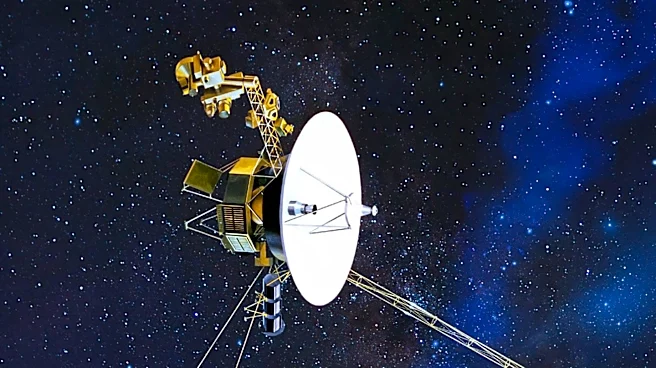
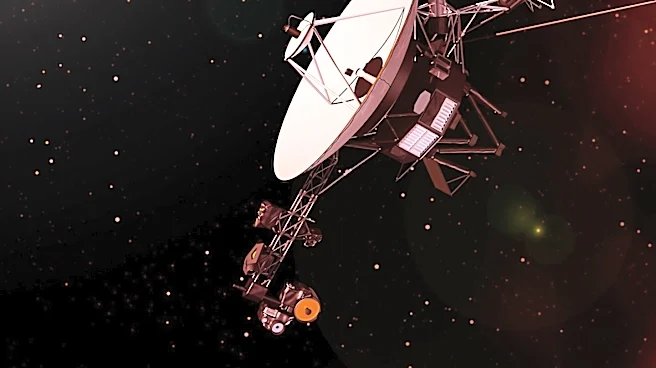
NASA's Voyager 1 probe, launched in 1977, crossed into interstellar space in 2012, marking a significant milestone as the first human-made object to do so. However, it remains within the solar system's gravitational boundary, the Oort Cloud, which it will
take thousands of years to exit. The heliopause, the boundary Voyager 1 crossed, is defined by the Sun's plasma influence, not its gravitational reach. This distinction highlights the complexity of defining the solar system's boundaries.
Why It's Important?
Voyager 1's journey underscores the vastness of the solar system and the challenges of space exploration. The probe's crossing into interstellar space represents a major achievement in human exploration, providing valuable data about the heliosphere and interstellar medium. Understanding these boundaries is crucial for future missions that aim to explore beyond our solar system. Voyager 1's mission also highlights the limitations of current technology, as it will cease communication long before reaching the Oort Cloud.
Beyond the Headlines
The distinction between the heliopause and the solar system's gravitational boundary raises questions about how we define and understand our cosmic neighborhood. Voyager 1's journey challenges our perceptions of distance and time in space exploration. The mission also serves as a reminder of the enduring impact of early space exploration efforts, as Voyager 1 continues to provide insights decades after its launch. This ongoing mission inspires future generations to push the boundaries of exploration and scientific discovery.