





What's Happening?
NASA's Deep Space Network (DSN) has successfully acquired the radio frequency signal from the Artemis II mission, marking a significant milestone in space communication. The Artemis II mission, which launched on April 1, 2026, is the first crewed mission to the Moon
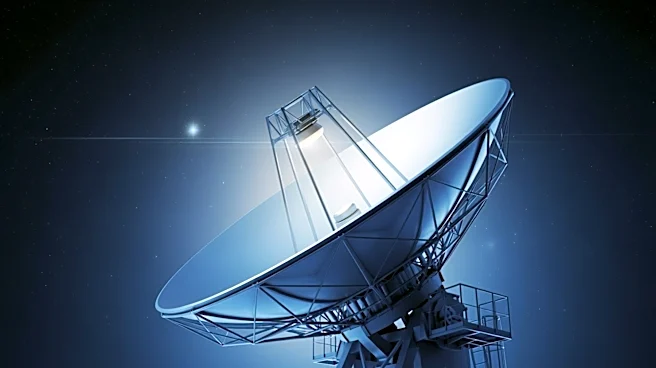
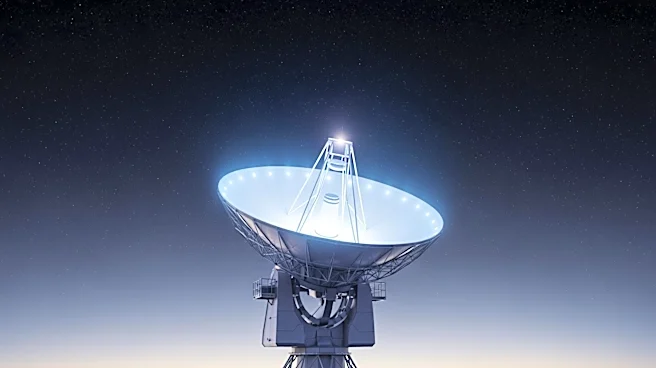
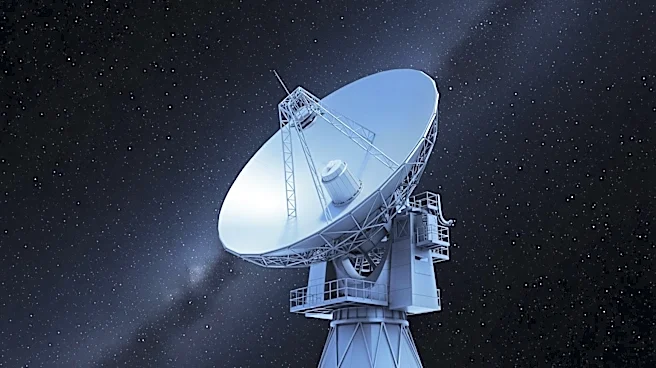
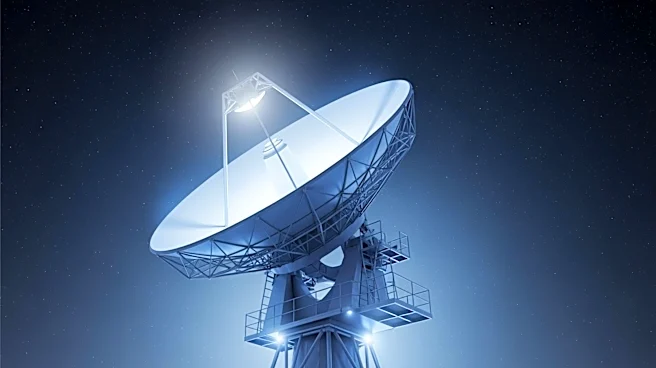
in over 50 years. The DSN, managed by NASA's Jet Propulsion Laboratory (JPL) in Southern California, consists of complexes in Goldstone, California; Madrid, Spain; and Canberra, Australia. These complexes are equipped with radio frequency antennas that facilitate communication with various robotic spacecraft exploring the solar system. The DSN's role is crucial as it allows for tracking, sending commands, and receiving scientific data from distant spacecraft. This development highlights the DSN's capability to support deep space missions, including the historic Artemis II mission.
Why It's Important?
The successful acquisition of the Artemis II signal by NASA's DSN underscores the importance of robust space communication infrastructure in supporting deep space exploration. This achievement not only marks a technological milestone but also reinforces NASA's commitment to advancing human spaceflight capabilities. The DSN's ability to communicate with crewed spacecraft traveling through deep space is vital for the success of future lunar and Mars missions. This development has significant implications for international collaborations and scientific research, as it enables the continuous flow of data and commands necessary for mission success. The Artemis II mission, as part of NASA's broader Artemis program, aims to establish a sustainable human presence on the Moon, paving the way for future exploration of Mars.
What's Next?
Following the successful signal acquisition, the Artemis II mission will continue its journey to the Moon, with the DSN providing ongoing communication support. The mission's progress will be closely monitored, and data collected will be analyzed to inform future Artemis missions. NASA's continued investment in space communication infrastructure will be crucial as the agency prepares for more complex missions, including the eventual human landing on Mars. The success of Artemis II will likely influence future funding and international partnerships, as NASA seeks to expand its exploration capabilities.