


What's Happening?
Defense Secretary Pete Hegseth revealed that he made a secret trip to the Middle East to meet with American troops involved in Operation Epic Fury, a joint U.S.-Israeli military operation against Iran. During a Pentagon briefing, Hegseth emphasized the high
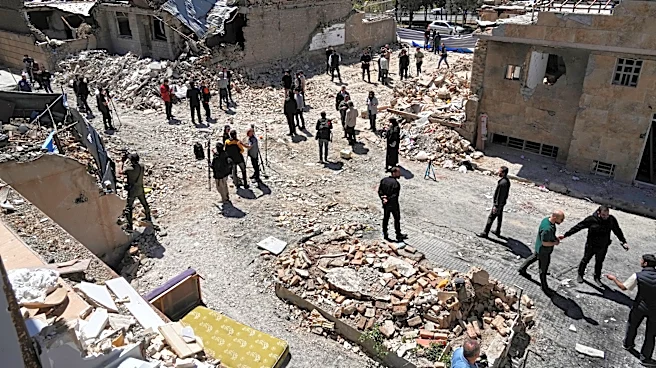
morale among service members and their determination to complete the mission. He refrained from disclosing specific details about the bases he visited. The operation, which has been ongoing for over a month, aims to disrupt Iran's military capabilities. Hegseth highlighted the strategic importance of the coming days in the conflict, noting that the U.S. has multiple military options at its disposal.
Why It's Important?
Hegseth's trip underscores the seriousness of the U.S. military's engagement in the Middle East and the potential for escalation in the conflict with Iran. The operation has significant implications for regional stability and global energy markets, as the Strait of Hormuz, a critical oil transit route, remains affected. The U.S. strategy and its call for allies to take a more active role could reshape international military alliances and influence global geopolitical dynamics. The conflict's outcome could affect U.S. foreign policy, defense spending, and international relations, particularly with countries reliant on Middle Eastern oil.
What's Next?
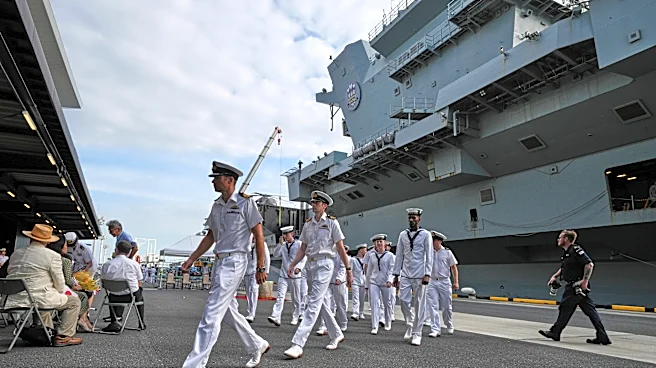
The U.S. military's actions in the coming days could determine the conflict's trajectory. Hegseth's comments suggest that the U.S. is prepared to escalate its military involvement if necessary. The Pentagon's strategy will likely focus on maintaining air superiority and disrupting Iran's supply chains. The U.S. has called on allies, particularly the United Kingdom, to increase their involvement in securing the Strait of Hormuz. The international community will be closely watching for any shifts in military tactics or diplomatic efforts to resolve the conflict.