






What's Happening?
Grover Norquist, President of Americans for Tax Reform, along with other coalition leaders, is advocating for the swift passage of the Bipartisan American Affordability and Jobs Act (BAAJA) in the Senate. This legislation aims to reform federal environmental
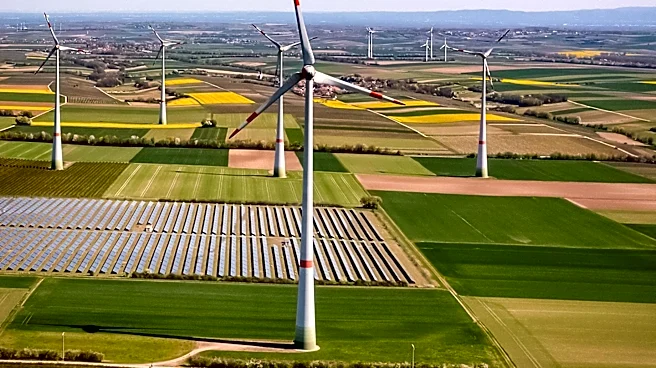
review and permitting processes to reduce energy costs, accelerate infrastructure projects, and curb litigation. The bill, introduced by Republican chairmen and ranking Democratic members of key Senate committees, is scheduled for a Senate vote on November 9. Supporters argue that BAAJA will provide certainty for builders and investors, addressing current issues where energy and infrastructure projects face years of review, redundant paperwork, political delays, and prolonged litigation. These delays, according to the coalition, discourage investment, increase reliance on foreign energy, and lead to higher energy costs and fewer jobs for American families and businesses. The North American Electric Reliability Corporation has warned of resource adequacy challenges in many regions, and electricity demand is growing, with residential prices increasing.
Why It's Important?
The potential passage of the Bipartisan American Affordability and Jobs Act holds significant implications for the U.S. economy and energy sector. By streamlining environmental review and permitting, the bill seeks to unlock investment in critical infrastructure and energy projects, which could lead to job creation and economic growth. The current system, characterized by lengthy delays and litigation, is seen as a barrier to development and a contributor to rising energy costs. If passed, BAAJA could help stabilize and potentially lower energy prices for consumers and businesses, addressing concerns about affordability that were prominent in recent midterm elections. Furthermore, by accelerating domestic energy production and infrastructure development, the U.S. could reduce its dependence on foreign energy sources, enhancing national energy security. The bill also addresses the growing demand for power from data centers, requiring them to cover associated transmission costs and contribute to grid updates, ensuring a fairer distribution of infrastructure burdens.
What's Next?
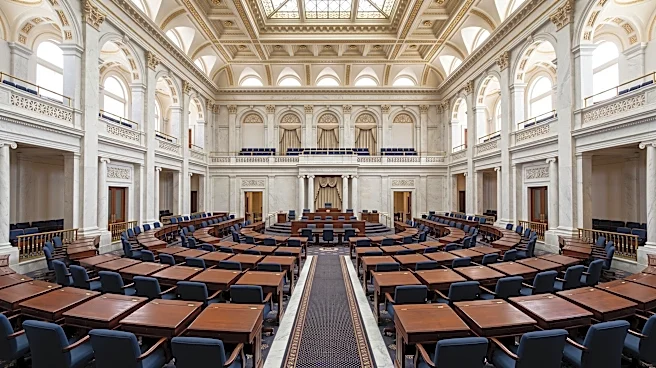
The Senate is scheduled to vote on the Bipartisan American Affordability and Jobs Act on November 9. Despite bipartisan sponsorship from committee leaders, it remains uncertain whether the bill will secure the 60 votes required for consideration under Senate rules. The upcoming vote will be a critical test of bipartisan cooperation in a post-election legislative session, often referred to as a lame-duck session. If the bill passes the Senate, it would then need to be passed by the House of Representatives before the end of 2026 to become law. Stakeholders, including advocates for limited government and free market policies, will be closely watching the vote, hoping to see campaign rhetoric on affordability translated into legislative action. The outcome will determine whether significant reforms to energy and infrastructure permitting can be achieved in the near term, impacting future investment and energy costs across the nation.
Beyond the Headlines
Beyond its immediate economic and energy implications, the debate and potential passage of BAAJA highlight deeper tensions surrounding environmental regulation and economic development in the U.S. The bill's focus on curbing 'superfluous litigation' and speeding up approvals suggests a legislative effort to rebalance environmental protections with the perceived need for faster economic progress. This could set a precedent for future legislative battles over regulatory frameworks, potentially shifting the balance of power between environmental advocacy groups and industry. The emphasis on reducing reliance on foreign energy sources also touches upon broader geopolitical strategies and national security concerns, linking domestic policy to international energy markets. Furthermore, the bipartisan nature of the bill's introduction, despite potential challenges in securing votes, underscores a recognition across the political spectrum of the need to address energy affordability and infrastructure bottlenecks, even if the methods remain contentious.