



What's Happening?
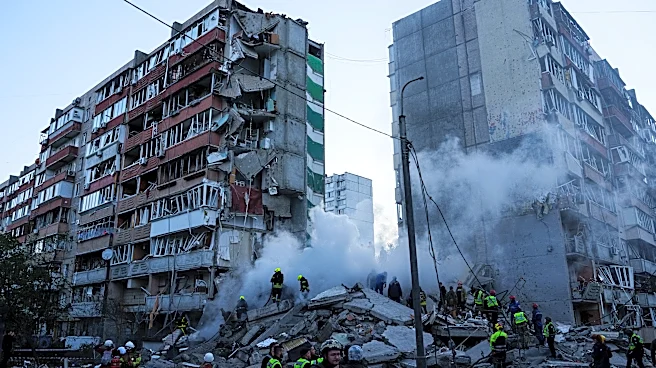
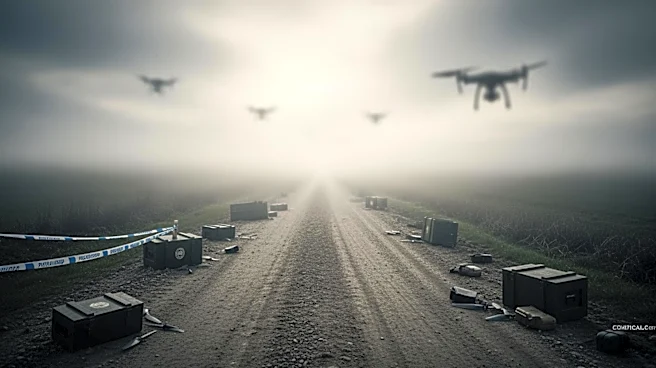
A United Nations humanitarian convoy was attacked by Russian FPV drones in Kherson on May 14, according to reports from the UN and local authorities. The convoy, clearly marked with UN insignia, was delivering aid to civilians in one of the most affected
areas of Kherson when it was struck. Despite the attack, the UN has not been able to identify the perpetrator. Russian Telegram channels later released footage of the drone strike, which has been described by Ukrainian officials as part of a systematic pattern of targeting civilians and humanitarian efforts in the region. The head of the UN Office for the Coordination of Humanitarian Affairs in Ukraine, Andrea de Domenico, expressed uncertainty about the identity of the attackers. This incident follows another similar attack on a UN vehicle in the Dnipropetrovsk region, raising concerns about the safety of humanitarian workers in the area.
Why It's Important?
The attack on the UN convoy highlights the ongoing dangers faced by humanitarian missions in conflict zones like Kherson. Such incidents not only threaten the lives of aid workers but also hinder the delivery of essential aid to civilians in need. The inability to identify the attackers complicates accountability and raises questions about adherence to international humanitarian law. This situation underscores the challenges of conducting humanitarian operations in areas with active military engagements and the potential for increased international scrutiny and pressure on the parties involved. The repeated targeting of humanitarian convoys could lead to a reduction in aid efforts, exacerbating the humanitarian crisis in the region.
What's Next?
The UN and other international bodies may increase diplomatic efforts to ensure the safety of humanitarian missions in conflict zones. There could be calls for stronger protective measures and clearer accountability mechanisms to prevent future attacks. The ongoing conflict in Kherson and similar regions may see heightened international attention, potentially leading to increased pressure on Russia to adhere to international laws regarding the protection of humanitarian workers. Additionally, the UN may seek to engage with both Russian and Ukrainian authorities to secure safe passage for future humanitarian missions.
Beyond the Headlines
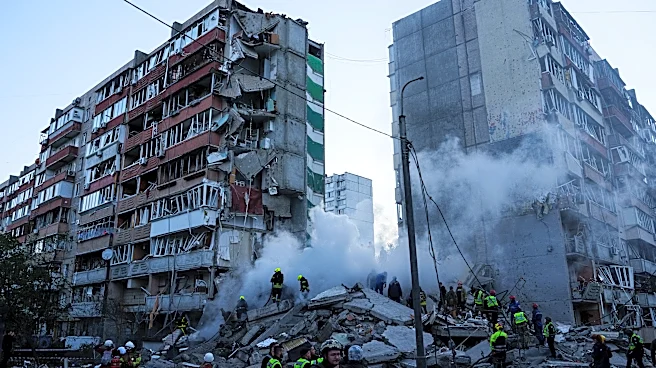
The attack on the UN convoy in Kherson reflects broader issues of international law and the protection of humanitarian workers in conflict zones. It raises ethical questions about the targeting of aid missions and the responsibilities of warring parties to protect civilians and humanitarian efforts. The incident may also influence future international policies and protocols regarding the safety of humanitarian operations in war-torn areas. Long-term, this could lead to changes in how humanitarian aid is delivered in conflict zones, with increased emphasis on security and coordination with local authorities.