





What's Happening?
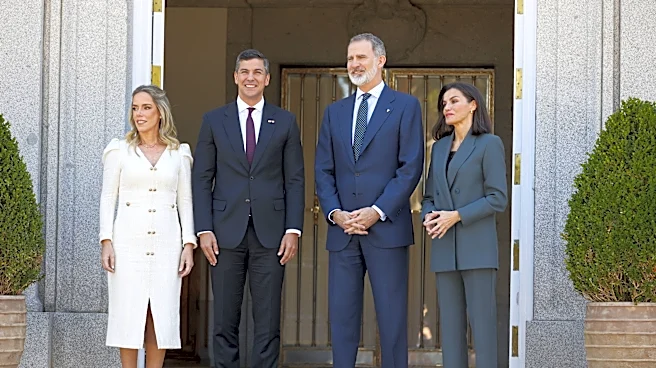
Queen Letizia of Spain's anticipated cooperation trip to Bolivia for 2026 has been canceled, marking the second time the visit has been postponed. The decision was made jointly by the Royal Household and the Ministry of Foreign Affairs, European Union,
and Cooperation. The primary reasons cited for the cancellation are the ongoing security instability in Bolivia, which is currently under a state of exception, and the early general elections scheduled in Spain for November 29. The trip was initially planned for June but was deferred due to protests and violence in the Andean nation. This visit was intended to allow Queen Letizia to engage with Spanish cooperation projects and the work of organizations in the field, a role she has undertaken in various countries since King Felipe VI ascended the throne in 2014. During the Ibero-American Summit in Madrid, Queen Letizia discussed the situation with Bolivian President Rodrigo Paz Pereira.
Why It's Important?
The cancellation of Queen Letizia's trip underscores the significant impact of political instability and security concerns on international diplomatic engagements and humanitarian efforts. For Spain, this highlights the challenges in maintaining its international cooperation agenda, particularly in regions facing internal strife. The Queen's cooperation trips are a crucial component of Spain's soft power and diplomatic outreach, aiming to foster goodwill and support development projects. The inability to proceed with such a high-profile visit due to security issues can affect the visibility and effectiveness of Spanish aid in Bolivia. Furthermore, the influence of Spain's domestic political calendar, specifically the snap elections, on international commitments demonstrates how internal affairs can ripple outwards, potentially delaying or altering foreign policy initiatives. This situation also reflects the broader global trend where political and security environments in host countries directly dictate the feasibility of international partnerships and aid missions.
What's Next?
Queen Letizia's visit to Bolivia is now tentatively scheduled for the first half of 2027, contingent on improvements in the country's security situation and the priorities set by Spain's new government following the upcoming elections. The configuration of the new Spanish government and the foreign minister's agenda will be critical in determining the feasibility and timing of future cooperation trips. Should the security situation in Bolivia remain volatile, further postponements or alternative arrangements might be considered. The Spanish Agency for International Development Cooperation (AECID) will likely continue its work in Bolivia, but the symbolic impact of a royal visit will remain on hold. This delay could also influence the planning of other international engagements for the Spanish Royal Household, as they navigate complex geopolitical landscapes and domestic political shifts.
Beyond the Headlines
The repeated cancellation of Queen Letizia's trip to Bolivia due to security concerns and domestic political factors reveals the intricate interplay between national security, international diplomacy, and internal governance. Beyond the immediate logistical challenges, such postponements can subtly impact bilateral relations and the perception of stability in the affected region. For Bolivia, the ongoing security issues not only deter high-level international visits but also signal broader challenges in governance and public order, potentially affecting foreign investment and international aid. For Spain, the incident highlights the delicate balance between projecting international influence through royal diplomacy and ensuring the safety of its representatives. It also brings to light the ethical considerations involved in planning humanitarian missions in unstable environments, where the safety of delegates must be weighed against the desire to provide support and visibility to aid projects.