





What's Happening?
U.S. Senator Todd Young, along with Senator Jim Banks and Representatives Frank J. Mrvan and Rep. Jim Baird, have collectively sent a letter to the National Oceanic and Atmospheric Administration (NOAA). The purpose of this letter is to advocate for the State
of Indiana's request to establish a National Estuarine Research Reserve (NERR) along Lake Michigan in Northwest Indiana. Senator Young emphasized that Lake Michigan is a vital part of Northwest Indiana's economy and a crucial natural resource. He believes a NERR could expand research and conservation efforts, with Purdue University offering valuable expertise. Senator Banks echoed this sentiment, stating that the reserve would strengthen conservation, expand research, and protect the shoreline. Representative Mrvan highlighted the region's environmental wonders and the partnership between the State of Indiana and Purdue University in enhancing conservation and research. Representative Baird described Lake Michigan as an ecological marvel and a crucial natural resource for Indiana, noting that the designation would support ongoing conservation efforts and economic opportunities.
Why It's Important?
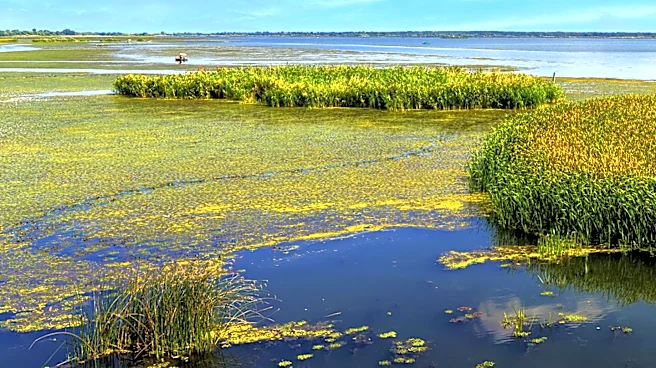
The proposed National Estuarine Research Reserve in Northwest Indiana is significant for several reasons. It aims to protect and enhance one of Indiana's most important natural resources, Lake Michigan, which is also vital to the region's economy. By establishing a NERR, the state can strengthen conservation efforts, expand scientific research opportunities, and ensure the long-term health of the shoreline for future generations. The involvement of Purdue University, a leading academic institution, is expected to bring valuable expertise and resources to the initiative, particularly in research and education. This collaborative effort between federal, state, and academic entities underscores a commitment to environmental stewardship and sustainable development. The reserve would also fill a gap in the Great Lakes region, as there are currently no NERRs along the southern shore of Lake Michigan, allowing for focused study and protection of its unique freshwater estuarine habitats.
What's Next?
The immediate next step involves NOAA's consideration of the letter from the Indiana Congressional delegation and the State of Indiana's formal request for a National Estuarine Research Reserve. The delegation is urging NOAA to move forward with the designation process. If NOAA approves the request, the subsequent phases would include detailed planning, site selection, and the development of management plans for the reserve. Purdue University is expected to play a central role in leading the research, education, and outreach components of the NERR. This process would likely involve further collaboration among federal agencies, state environmental departments, local communities, and academic researchers to ensure the effective establishment and operation of the reserve, ultimately benefiting the ecological health and economic vitality of Northwest Indiana.
Beyond the Headlines
The initiative to establish a National Estuarine Research Reserve in Northwest Indiana reflects a growing recognition of the intrinsic value of freshwater ecosystems and the need for dedicated conservation efforts. Beyond the immediate environmental benefits, such a reserve can serve as a living laboratory for climate change research, providing critical data on how these unique habitats respond to environmental shifts. It also has the potential to foster a deeper connection between the public and their natural surroundings through educational programs, promoting environmental literacy and stewardship. The collaboration between political leaders and academic institutions like Purdue University highlights a pragmatic approach to addressing complex ecological challenges, demonstrating how scientific expertise can inform policy and drive conservation outcomes. This effort could also inspire other states in the Great Lakes region to pursue similar designations, creating a more comprehensive network of protected freshwater estuaries.