


What's Happening?
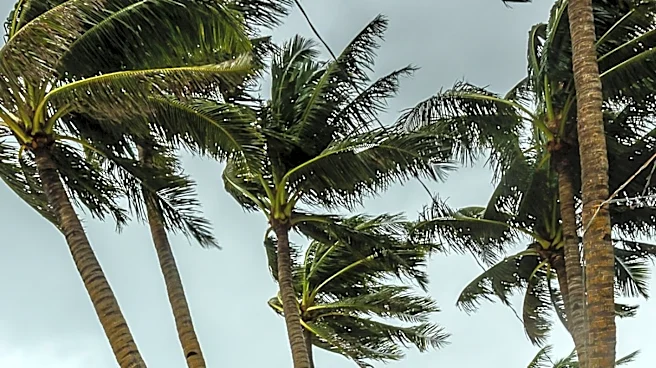
Typhoon Dolphin, a Category 1 storm, is approaching southwestern Japan, prompting the evacuation of nearly 260,000 residents in Kagoshima and Okinawa prefectures. The Japan Meteorological Agency reports that the typhoon has maximum sustained winds of 144
kph, with gusts reaching 198 kph. Over 500 flights have been canceled, and Toyota has suspended operations at nine factories. The storm poses a risk of structural damage and flooding, particularly in areas still recovering from a recent earthquake.
Why It's Important?
The typhoon's approach underscores the vulnerability of Japan's infrastructure and communities to natural disasters. The evacuation and flight cancellations highlight the immediate impact on transportation and economic activities. The potential for damage to buildings and infrastructure poses significant challenges for recovery efforts, particularly in regions already affected by previous disasters. The situation emphasizes the importance of disaster preparedness and resilience in mitigating the impact of such events.
What's Next?
As Typhoon Dolphin continues its path, authorities will need to monitor its progress and adjust safety measures accordingly. The storm's potential to cause further disruptions and damage will require ongoing coordination between government agencies and communities. Efforts to support affected residents and restore normalcy will be crucial in the aftermath of the typhoon.