




What's Happening?
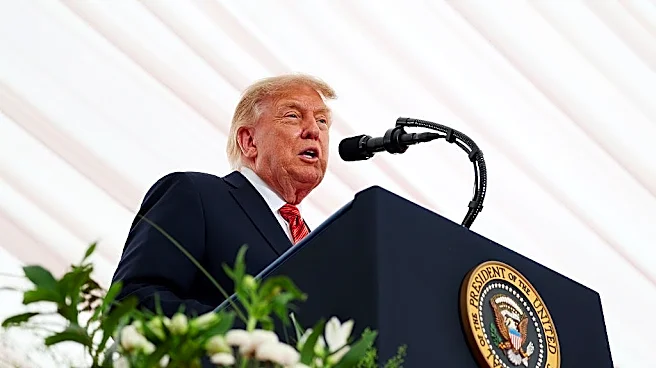
President Trump has strongly criticized Representative Alexandria Ocasio-Cortez and New York City Mayor Zohran Mamdani for appearing to laugh during the 9/11 memorial ceremony at Ground Zero. The incident, captured on video, shows the two smiling and conversing
while the names of victims from the September 11, 2001, attacks were being read aloud. President Trump described their behavior as 'terrible' and 'inappropriate,' emphasizing that the solemn occasion was not a moment for laughter. The video quickly circulated on social media, drawing widespread condemnation from various public figures, including Republican Representative Wesley Hunt of Texas and New York City Councilwoman Inna Vernikov. Representative Hunt stated that Ground Zero is 'sacred ground' and not a place for political interactions or photo opportunities. The controversy also follows a petition signed by over 110,000 victims' families requesting Mamdani not to attend the memorial, though he ultimately did.
Why It's Important?
This incident highlights the intense scrutiny public figures face, particularly during events of national remembrance and tragedy. The swift and widespread criticism from President Trump and other political figures underscores the deep emotional significance of the 9/11 memorial for many Americans. The differing interpretations of the video—with some viewing it as disrespectful and others, like Michael Ragusa, an aide to former Mayor Rudy Giuliani, claiming it was merely a greeting—illustrate the polarized nature of public discourse. This event could further fuel political divisions, especially concerning how elected officials conduct themselves at solemn national events. The controversy also brings attention to the role of social media in amplifying such moments, shaping public perception, and potentially impacting the political standing of the individuals involved.
What's Next?
The immediate aftermath will likely involve continued public debate and commentary from political figures and media outlets regarding the appropriateness of the behavior displayed by Representative Ocasio-Cortez and Mayor Mamdani. Both individuals may face pressure to issue statements or clarifications regarding the incident, especially given the strong reactions from President Trump and other critics. The event could become a talking point in future political campaigns or discussions about decorum in public service. Depending on their responses, the incident could either fade from public memory or continue to be cited as an example of perceived disrespect or political opportunism, particularly by their political opponents. The broader implications for how public figures engage at sensitive national memorials will also likely be discussed.
Beyond the Headlines
Beyond the immediate political fallout, this incident touches upon deeper societal expectations regarding grief, respect, and public conduct at sites of national tragedy. The differing interpretations of the video—whether it was a moment of genuine disrespect or a misconstrued interaction—underscore the challenges of public perception in the age of instant media and social media virality. It raises questions about the responsibility of public figures to maintain a certain demeanor at all times during such events, and the potential for brief, inaudible exchanges to be weaponized in political discourse. The controversy also highlights the enduring sensitivity surrounding the 9/11 attacks and the collective memory of the nation, where any perceived deviation from solemnity can provoke strong emotional responses and accusations of insensitivity.