



What's Happening?
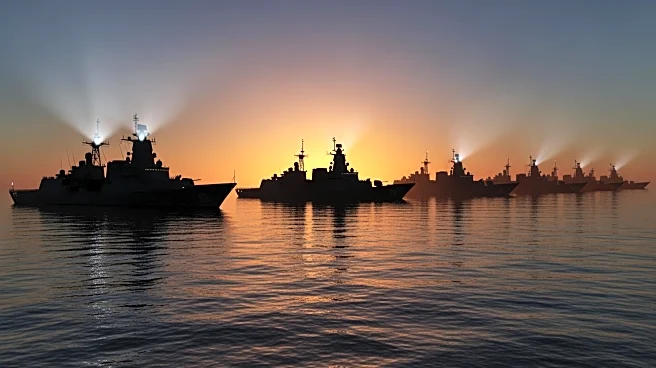
The Indian Navy is set to host a significant international exercise at its Visakhapatnam base, known for its strategic location and shipbuilding capabilities. The event, commencing on February 18, includes an International Fleet Review and Exercise Milan-2026,
featuring anti-submarine warfare, air defense, and search-and-rescue operations. The INS Vikrant, an Indian Vikrant Class carrier, will lead the sea phase. Invitations have been extended to 135 countries, with 55 nations confirming participation, including the United States, Iran, and other major naval powers. The event poses a diplomatic challenge, especially with the recent seizure of three Iran-associated tankers by the Indian Coast Guard, which could impact Iran's participation.
Why It's Important?
This international fleet review is crucial for testing diplomatic relations, particularly between countries with strained ties, such as the United States and Iran. The participation of these nations in a joint naval exercise could either ease tensions or exacerbate them, depending on the interactions during the event. The exercise also highlights India's growing influence in maritime security and its strategic role in the Indian Ocean region. The presence of multiple naval powers underscores the importance of maintaining open communication channels and cooperation in international waters, which is vital for global maritime security and trade.
What's Next?
The exercise will be closely monitored for any diplomatic incidents, especially involving the United States and Iran. The outcome could influence future naval collaborations and India's role as a mediator in regional conflicts. Observers will also watch for any changes in participation due to the recent tanker seizures, which could affect Iran's involvement. The event's success or failure could set a precedent for future international naval exercises and India's diplomatic standing.
Beyond the Headlines
The exercise may have long-term implications for regional security dynamics, particularly in the Indian Ocean. It could lead to increased military cooperation among participating nations or highlight existing geopolitical tensions. The event also raises questions about the enforcement of international sanctions and the role of naval power in diplomatic negotiations. The presence of adversarial nations in close quarters could either foster dialogue or lead to heightened tensions, impacting global maritime policies.