








What's Happening?
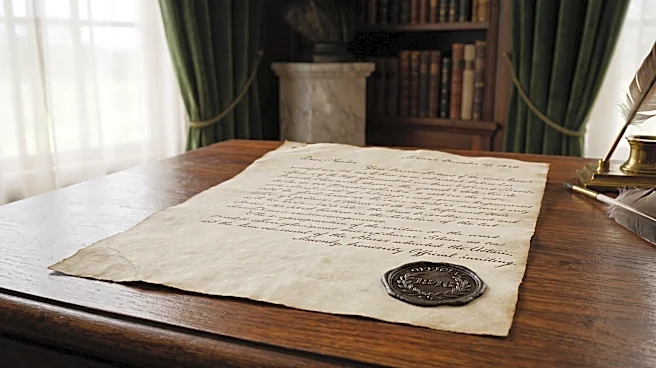
On November 9, 1863, Massachusetts Governor John Andrew sent a letter to Secretary of War Edwin Stanton requesting a 30-day furlough for Sergeant William H. Carney. The purpose of the furlough was to allow Sgt. Carney to return home and visit his family.
Sgt. Carney had been severely wounded in July of the same year while carrying the colors during the attack on Fort Wagner. This request highlights the personal attention given to soldiers, even amidst the large-scale conflict of the Civil War, and the efforts made by state governors to support their constituents.
Why It's Important?
This event underscores the human element within the brutal context of the American Civil War. Sgt. William H. Carney's actions at Fort Wagner, where he bravely carried the colors despite severe injuries, were historically significant, making him one of the first African American recipients of the Medal of Honor. Governor Andrew's intervention on his behalf demonstrates the recognition of individual valor and sacrifice, particularly for African American soldiers who were fighting not only for the Union but also for their own freedom and dignity. This act of compassion from a state governor to a wounded soldier, directed to the Secretary of War, illustrates the interconnectedness of state and federal leadership in managing the war effort and caring for troops.
Beyond the Headlines
The request for Sgt. Carney's furlough transcends a simple administrative act; it symbolizes the evolving recognition of African American soldiers' contributions during the Civil War. At a time when racial prejudices were deeply entrenched, the acknowledgment of Sgt. Carney's heroism by a state governor and the Secretary of War was a powerful statement. It contributed to the broader narrative of African American bravery and their integral role in the Union victory, which ultimately paved the way for greater civil rights. This historical moment serves as a reminder of the personal sacrifices made by soldiers and the efforts to honor them, even as the nation grappled with profound social and political change.