
What's Happening?
Egypt has entered into renewable energy agreements valued at $1.8 billion, focusing on large-scale solar generation paired with significant battery storage and local manufacturing. These deals, signed
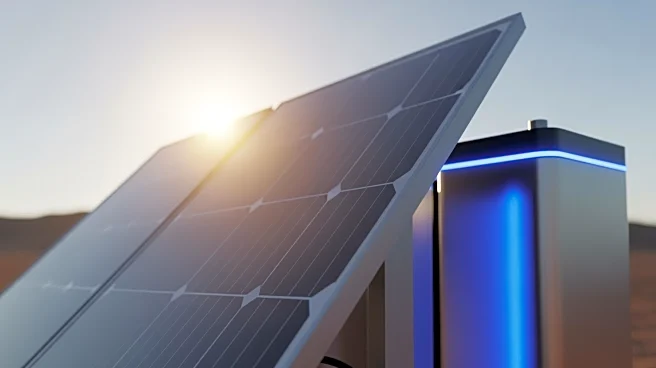
in the Suez Canal Economic Zone, aim to increase the share of renewables in Egypt's power mix by 2030. The agreements include a major project with Scatec ASA for 1.95 gigawatts of solar capacity and 3.9 gigawatt-hours of battery storage. Additionally, Sungrow Power Supply will establish a battery-manufacturing facility in the Suez Canal Economic Zone, contributing to the Minya solar-plus-storage project. These initiatives are part of Egypt's strategy to build domestic value chains and reduce import dependency, positioning the country as a regional energy hub.
Why It's Important?
The agreements represent a significant step towards Egypt's goal of having renewables supply 42% of its electricity by 2030. The integration of solar and storage technologies is crucial for enhancing the reliability and dispatchability of renewable energy, reducing reliance on fossil fuels. The local manufacturing component supports economic growth and job creation, while also reducing the need for imported battery modules. However, the success of these projects depends on resolving discrepancies in capacity figures, securing financing, and ensuring timely grid connections. The projects highlight the challenges and opportunities in transitioning to a renewable energy economy.
What's Next?
The next steps involve finalizing power purchase agreements, securing financing, and establishing construction timelines. The projects' impact on Egypt's energy mix and fiscal health will depend on these factors. The government will need to address potential risks, such as currency exposure and grid integration challenges. Successful implementation could serve as a model for other countries in the region, attracting further international investment and support for renewable energy initiatives.