






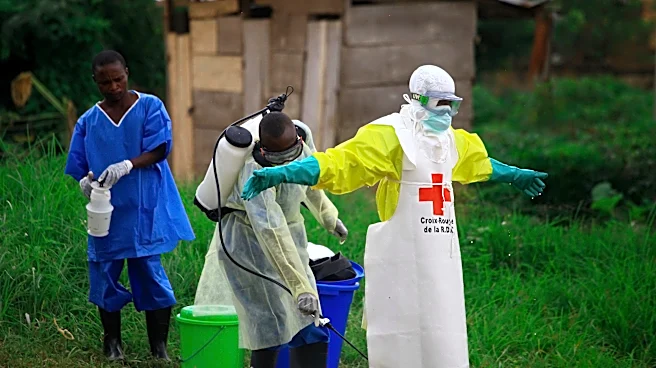
What's Happening?
The World Health Organization (WHO) has declared the Ebola outbreak in the Democratic Republic of Congo (DRC) and Uganda a public health emergency of international concern. The outbreak, which involves the Bundibugyo strain of the Ebola virus, has resulted
in 246 suspected cases and 88 deaths. It originated in the Ituri province of eastern DRC and has spread to other regions, including neighboring Uganda. The Bundibugyo strain is particularly concerning as there is no approved vaccine or treatment available. The WHO's declaration aims to prompt international efforts to contain the virus and prevent further spread.
Why It's Important?
The declaration of a global health emergency underscores the severity of the Ebola outbreak and the challenges in containing it. The lack of a vaccine for the Bundibugyo strain complicates efforts to control the virus, especially in conflict-affected areas where healthcare facilities may be targeted. The outbreak poses a significant threat to public health in the region and could potentially spread further if not contained. The international community's response will be crucial in providing resources and support to affected areas to prevent a larger epidemic.
What's Next?
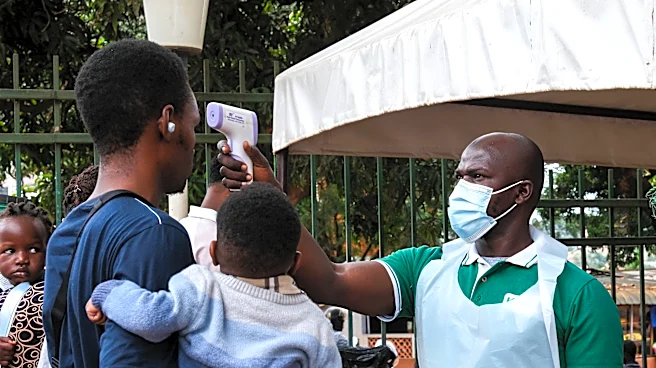
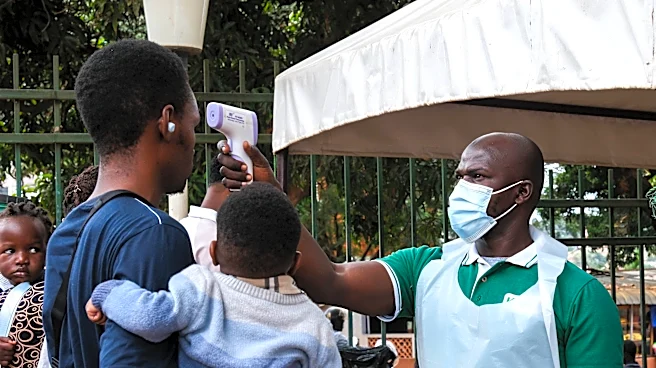
Efforts to contain the outbreak will likely involve increased international collaboration and resource allocation to the affected regions. Health authorities may implement measures such as cross-border screenings and emergency management mechanisms to limit the virus's spread. The situation requires urgent attention to prevent further loss of life and to manage the public health risks associated with the outbreak. Continued monitoring and rapid response will be essential in addressing the challenges posed by the Ebola virus in the DRC and Uganda.