





What's Happening?
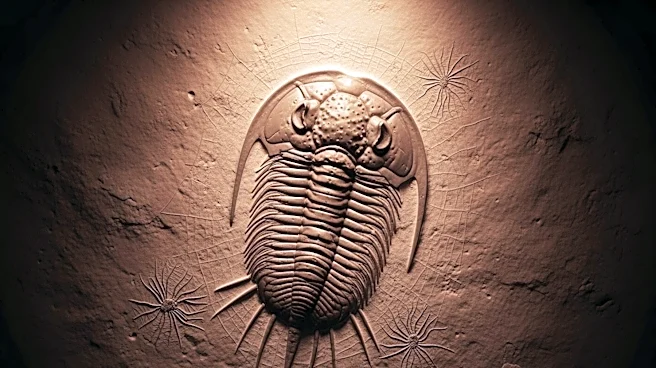
A fossil discovered over 40 years ago in Utah has been re-examined and identified as a new species of chelicerate, named Megachelicerax cousteaui. This discovery, made by Harvard University paleontologist Rudy Lerosey-Aubril, pushes back the origins of chelicerates,
the arthropod group that includes spiders and horseshoe crabs, by 20 million years to the Cambrian period. The fossil features massive, three-segmented chelicerae, which are pincer-like appendages, confirming its classification as a chelicerate. The study, published in Nature, highlights the anatomical complexity of arthropods during the Cambrian era.
Why It's Important?
The identification of Megachelicerax cousteaui provides significant insights into the evolutionary history of chelicerates, suggesting that their anatomical blueprint was established much earlier than previously thought. This discovery challenges existing theories about the timeline of arthropod evolution and highlights the complexity of Cambrian ecosystems. The findings could influence future research on the evolutionary patterns of other animal groups, emphasizing the role of timing and environmental context in evolutionary success.
What's Next?
The discovery of Megachelicerax cousteaui may prompt further paleontological investigations into Cambrian fossils to uncover more about the early evolution of arthropods. Researchers might explore other regions for similar fossils to better understand the diversity and ecological roles of early chelicerates. This could lead to a reevaluation of the evolutionary timeline for other arthropod groups and their adaptation to terrestrial environments.
Beyond the Headlines
The discovery underscores the importance of re-examining previously collected fossils with new technologies and perspectives. It highlights the potential for significant scientific breakthroughs from existing collections, encouraging museums and research institutions to revisit their archives. This approach could lead to new insights into the evolutionary history of various species and the environmental conditions of ancient Earth.