
What's Happening?
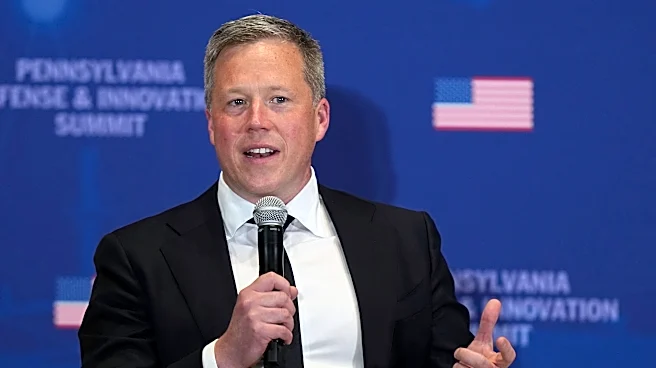
President Trump has announced his nomination of Acting Navy Secretary Hung Cao to assume the position full-time. The announcement was made via social media, with President Trump praising Cao as a "true
warrior" and emphasizing the need for patriots to lead the Navy and Marine Corps. Cao, a Vietnamese refugee who immigrated to America in 1975, is a graduate of the U.S. Naval Academy and served 25 years in the military, including deployments with special operations forces in Iraq, Afghanistan, and Somalia. He also holds a master's degree in physics from the Naval Postgraduate School. Cao previously served as Under Secretary of the Navy and took on the acting role in April 2026 after the previous acting secretary, John Phelan, was fired. In his acting capacity, Cao outlined a vision focused on "alpha males and alpha females" and delivering a mix of ships to achieve a "Golden Fleet." He also stressed the importance of controlling the narrative and providing information to instill trust within the American people, establishing the Department of the Navy Communication Strategy in June.
Why It's Important?
The nomination of Hung Cao as Secretary of the Navy is significant for several reasons. His background as a Vietnamese refugee and a decorated military veteran brings a unique perspective to the leadership of the U.S. Navy. His emphasis on "alpha males and alpha females" and the concept of a "Golden Fleet" suggests a focus on traditional military strength and readiness, which could influence naval strategy and resource allocation. This nomination also highlights President Trump's preference for leaders with strong military backgrounds and a particular ideological alignment. The focus on controlling the narrative and instilling public trust through communication strategy indicates a recognition of the importance of public perception and internal morale within the armed forces. If confirmed, Cao will be responsible for overseeing the Navy's budget, shipbuilding programs, aircraft procurement, and equipment maintenance, all of which have substantial implications for national security, defense industries, and technological advancements in naval warfare. His leadership will shape the future direction and capabilities of the U.S. Navy and Marine Corps.
What's Next?
Before Hung Cao can assume the full-time role of Secretary of the Navy, his nomination must be confirmed by the Senate. This process will involve hearings where senators will question Cao on his vision for the Navy, his qualifications, and his stance on various defense-related issues. The confirmation process could be contentious, especially given his past political activities, including an unsuccessful Senate race against Senator Tim Kaine (D-Va.) in 2024, where he criticized diversity and inclusion efforts in the military. If confirmed, Cao will immediately face the challenges of managing the Navy's budget, advancing shipbuilding initiatives, and ensuring the readiness of naval forces amidst evolving global threats. His focus on a "high- and low-mix of ships" and the development of sixth-generation aircraft like the F/A-XX will be key areas of attention. The Department of the Navy Communication Strategy, which he established, will also be crucial in shaping public and internal perceptions of the Navy's mission and achievements.
Beyond the Headlines
Beyond the immediate confirmation process, Cao's nomination and his stated priorities could have deeper implications for the culture and direction of the U.S. military. His emphasis on "alpha males and alpha females" and his past criticisms of diversity and inclusion efforts could signal a shift in military policy regarding recruitment, retention, and promotion. This could lead to debates about the role of identity politics versus traditional military values within the armed forces. Furthermore, his focus on a "Golden Fleet" and specific shipbuilding programs reflects a broader strategic vision for projecting U.S. power globally, which could influence international relations and alliances. The narrative control strategy he initiated also raises questions about transparency and the balance between maintaining public trust and managing information in a complex geopolitical environment. His personal journey as a refugee who rose to a high-ranking position in the U.S. military also serves as a powerful symbol, potentially inspiring some while drawing scrutiny from others regarding his policy stances.