






What's Happening?
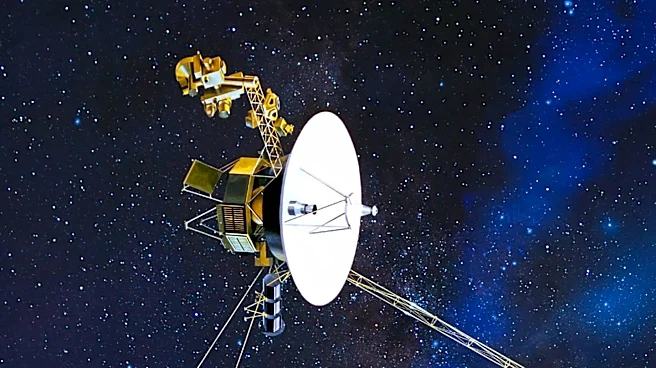
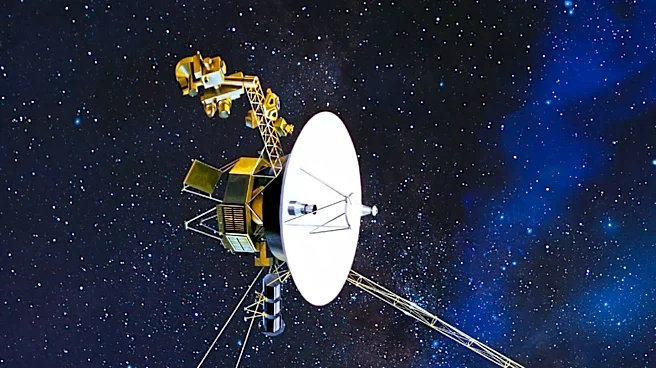
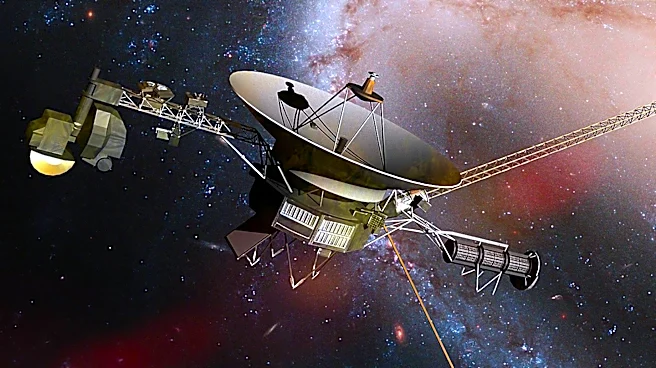
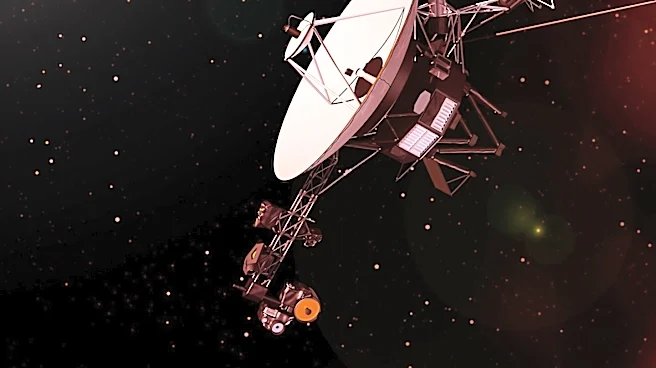
Engineers at NASA's Jet Propulsion Laboratory have successfully managed to extend the operational life of Voyager 2 by freeing up power. This was achieved by turning off certain powered devices and substituting them with lower-power alternatives, ensuring
the spacecraft remains warm enough to operate. Voyager 2, which relies on radioisotope thermoelectric generators for power, loses about 4 watts of power each year due to the depletion of its plutonium supply. The recent power management efforts, dubbed the 'Big Bang,' will allow Voyager 2 to continue its scientific mission for at least an additional year.
Why It's Important?
The extension of Voyager 2's mission is a testament to the ingenuity and resourcefulness of NASA's engineering team. As one of the most distant human-made objects in space, Voyager 2 continues to provide valuable scientific data about the outer reaches of our solar system. The ability to extend its operational life ensures that scientists can continue to gather data that may offer insights into interstellar space. This development highlights the importance of innovative problem-solving in space exploration and the potential for continued discoveries from long-term missions.