
What's Happening?
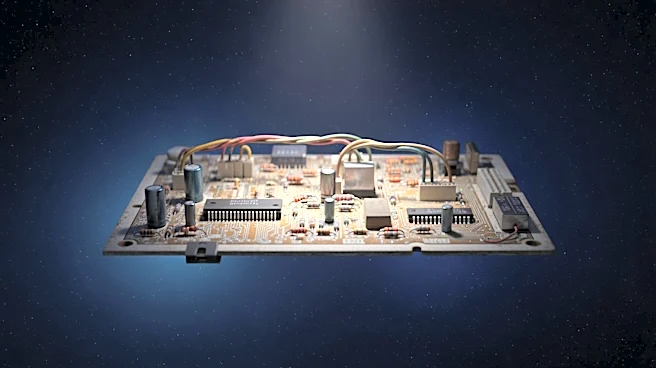
NASA continues to operate the Voyager spacecraft using software written in a 1970s-era programming language that is now largely obsolete. The spacecraft rely on assembly language for their onboard computers,
which were designed for General Electric processors from the early 1970s. The challenge is compounded by the fact that the engineers who originally developed this software are no longer available, and the documentation has been lost or fragmented over the years. The current team at NASA's Jet Propulsion Laboratory (JPL) is tasked with maintaining these systems, but they face difficulties due to the specialized nature of the programming and the aging hardware. The Voyager mission, which began in 1977, has seen its team shrink and age, with much of the original knowledge base eroding over time.
Why It's Important?
The situation with the Voyager spacecraft highlights a broader issue of technological obsolescence and the loss of institutional knowledge. As the original engineers retire or pass away, NASA faces a critical challenge in finding new engineers who can understand and maintain the legacy systems. This is significant for the continued operation of the Voyager mission, which provides valuable scientific data from deep space. The loss of expertise could impact NASA's ability to manage and extend the life of these spacecraft, potentially leading to a premature end to the mission. Moreover, this scenario underscores the importance of preserving technical documentation and training new generations of engineers in legacy systems to ensure continuity in long-term projects.
What's Next?
NASA is working to address the challenges posed by the aging Voyager systems. The agency is focusing on training new engineers who can work with the assembly language and understand the intricacies of the spacecraft's hardware. However, the pool of engineers with the necessary skills is limited, and the task is complicated by the need to work with outdated technology. The Voyager spacecraft are expected to continue transmitting data until around 2036, depending on the available power. As the 50th anniversary of the Voyager launch approaches in 2027, NASA is likely to prioritize efforts to maintain the mission's viability and explore options for extending its operational life.
Beyond the Headlines
The Voyager mission's challenges reflect broader issues in the field of space exploration, where long-term projects often outlast the technologies and expertise that initiated them. This situation raises questions about how to manage legacy systems and the importance of knowledge transfer in scientific and engineering fields. The reliance on a dwindling number of experts highlights the need for strategic planning in workforce development and the preservation of technical knowledge. Additionally, the Voyager mission serves as a reminder of the rapid pace of technological change and the need for adaptability in managing aging infrastructure.