








What's Happening?
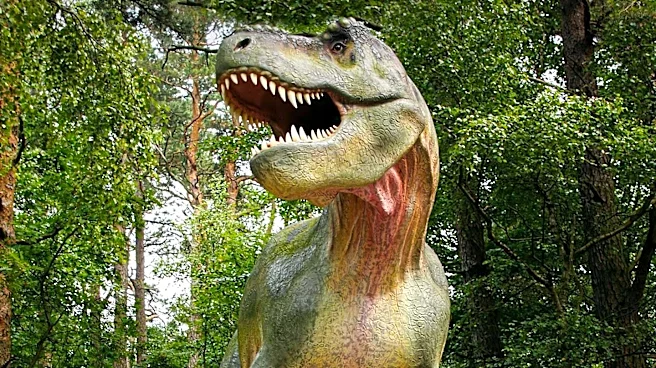
The Tyrannosaurus rex has been identified as the largest land carnivore of its era in North America, with an estimated weight ranging from 8 to 10 metric tons (approximately 17,600 to 22,000 pounds). This makes it significantly heavier than rival carnivores
of its time. The T. rex is characterized by its formidable size, standing four meters tall with one-and-a-half-meter-long jaws capable of crushing bones. Its sensory capabilities, including highly sensitive olfactory bulbs for smell and large eyes for vision, suggest it was a lethal nocturnal hunter. Despite its massive weight, its physiology likely limited its top speed to around 15 to 20 mph, making it more of a 'speed walker' than a sprinter, relying on surprise for hunting. Evidence from fossilized feces (coprolites) indicates that T. rex consumed juvenile prey, including baby dinosaurs, due to their vulnerability and ease of capture, highlighting its opportunistic feeding habits.
Why It's Important?
The detailed understanding of the Tyrannosaurus rex's physical attributes, hunting strategies, and dietary habits provides crucial insights into the prehistoric ecosystems of North America. Its role as the apex predator shaped the evolutionary pressures on other species, influencing their defense mechanisms and survival strategies. The study of its physiology, particularly the limitations imposed by its immense size on speed, challenges popular depictions and offers a more scientifically accurate view of its behavior. Furthermore, the analysis of coprolites to determine its diet underscores the importance of diverse fossil evidence in reconstructing ancient food webs and ecological dynamics. This research contributes to a broader understanding of how large carnivorous dinosaurs interacted with their environment and prey, offering valuable data for paleontological studies and public education on prehistoric life.
What's Next?
Ongoing paleontological research continues to uncover more about the Tyrannosaurus rex and its contemporaries. Future studies may focus on refining estimates of its population density, social behaviors, and the specific environmental conditions that supported such a large predator. Advances in fossil analysis techniques, such as detailed biomechanical modeling and further examination of trace fossils like footprints and coprolites, could yield new information on its locomotion, bite force, and digestive processes. The continuous discovery of new fossil sites and improved analytical methods promise to further enhance our understanding of this iconic dinosaur and the broader Cretaceous period.
Beyond the Headlines
The enduring fascination with the Tyrannosaurus rex extends beyond scientific circles, deeply influencing popular culture, media, and educational content. Its image as a powerful and fearsome predator has become a symbol of prehistoric life, driving interest in paleontology and natural history among the general public. The scientific findings regarding its hunting methods and physical limitations offer a more nuanced perspective, moving beyond sensationalized portrayals to a more accurate, albeit still awe-inspiring, understanding. This blend of scientific discovery and cultural impact highlights the importance of paleontological research in shaping our collective knowledge and imagination about Earth's ancient past, encouraging critical thinking about scientific evidence versus popular myths.