




What's Happening?
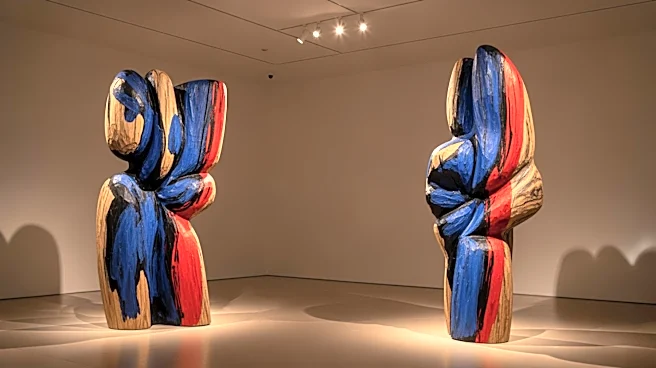
Morocco is making its first appearance at the Venice Biennale with a national pavilion that highlights its rich craft traditions. The installation, titled 'Asetta,' is a 300 square meter site-specific work by Moroccan artist Amina Agueznay, located in the Arsenale.
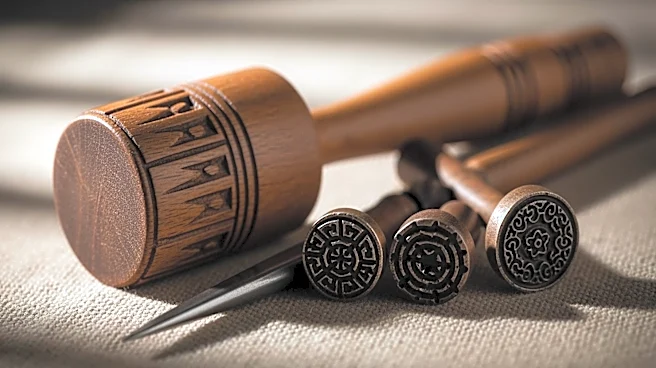
Agueznay, who is also a trained architect, collaborated with over 130 artisans, primarily women, from various regions of Morocco, including Casablanca, Marrakech, and the Atlas Mountains. The installation explores the transmission of traditional craftsmanship and shared memory, resonating with the Biennale's theme, 'In Minor Keys.' It examines the concept of the threshold, or 'atba,' a vital element in Moroccan architecture, representing the passage between different realms. The installation also offers a functional aspect, allowing visitors to sit and absorb the work's energy.
Why It's Important?
This debut is significant as it showcases Morocco's cultural heritage on an international stage, emphasizing the importance of preserving and transmitting traditional crafts. The collaboration with local artisans highlights the role of women in sustaining these traditions, offering them a platform for recognition. The installation not only celebrates Moroccan culture but also contributes to the global dialogue on art and heritage. By participating in the Venice Biennale, Morocco strengthens its cultural diplomacy and enhances its visibility in the international art scene, potentially attracting more interest and investment in its cultural sectors.
What's Next?
Following the Biennale, the impact of Morocco's participation could lead to increased opportunities for its artists and artisans. The exposure may encourage further collaborations and exchanges with international artists and institutions. Additionally, the success of this pavilion could inspire other countries to highlight their cultural heritage in future Biennales, fostering a richer and more diverse artistic dialogue. The focus on traditional crafts might also spur initiatives to preserve and innovate these practices within Morocco, ensuring their sustainability for future generations.
Beyond the Headlines
The installation's exploration of thresholds and transitions reflects broader themes of cultural identity and globalization. As societies become more interconnected, the preservation of cultural heritage becomes crucial in maintaining unique identities. This installation serves as a reminder of the importance of cultural roots in a rapidly changing world. It also raises questions about the role of art in bridging cultural divides and fostering understanding among diverse communities. The emphasis on women's contributions to traditional crafts highlights gender dynamics within cultural preservation, potentially influencing future discussions on gender equality in the arts.