

What's Happening?
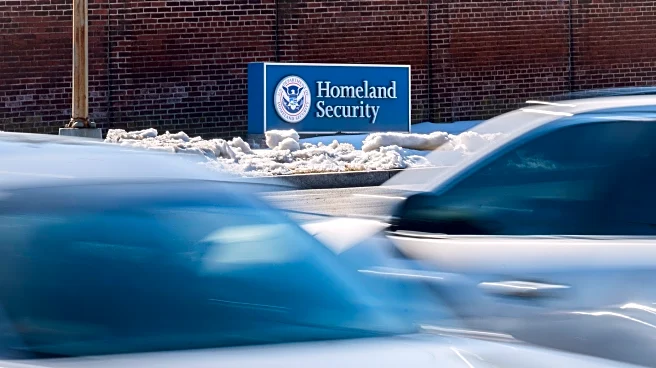
A partial government shutdown has commenced due to a deadlock between congressional Democrats and President Trump's administration over the funding of the Department of Homeland Security (DHS). The impasse arose after Democrats demanded changes in immigration
operations following the fatal shootings of two U.S. citizens by federal officers. The shutdown affects several agencies, including the Transportation Security Administration and U.S. Customs and Border Protection, with about 90% of DHS employees continuing to work without pay. The White House, led by border czar Tom Homan, has rejected demands for federal officers to remove masks and display ID numbers, citing safety concerns. Democrats are also pushing for body cameras and judicial warrants for arrests on private property.
Why It's Important?
The shutdown highlights the ongoing tension between the Trump administration and congressional Democrats over immigration policies. The refusal to compromise on oversight measures for federal immigration officers underscores the broader debate on immigration enforcement and civil liberties. The financial strain on DHS employees working without pay could lead to economic hardships, reminiscent of the record 43-day shutdown last year. The situation also reflects the polarized political climate, with both parties entrenched in their positions, potentially affecting public trust in government operations.
What's Next?
With Congress on recess until February 23, the shutdown is likely to continue unless a compromise is reached. The ongoing negotiations will test the willingness of both parties to find common ground on immigration oversight. The outcome could influence future legislative efforts and impact the political landscape ahead of the upcoming elections. Stakeholders, including federal employees and immigration advocates, will be closely monitoring developments, as the shutdown's resolution could set precedents for future government funding disputes.