









What's Happening?
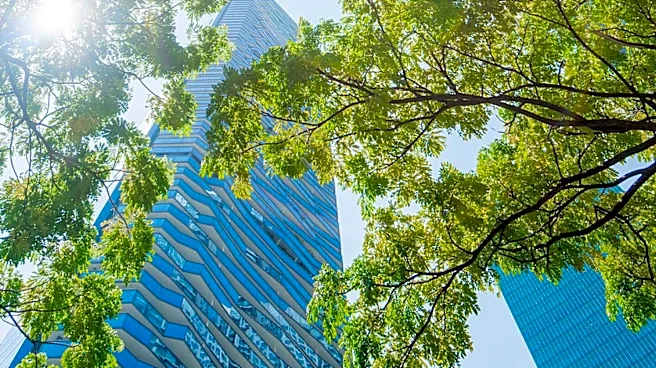
A recent study highlights the significant impact of tree canopies and green infrastructure on urban climate resilience. Conducted by the Healthy Green Spaces Coalition, the research analyzed over 36,000 census tracts across 65 U.S. cities, revealing that
neighborhoods with abundant tree cover are cooler by nearly 1 degree Fahrenheit compared to those with minimal vegetation. The study emphasizes the role of trees in reducing urban heat island effects, lowering energy costs, and enhancing worker productivity. Additionally, green infrastructure such as bioswales and green corridors are identified as crucial for managing stormwater runoff and reducing flooding. These findings advocate for the integration of trees and vegetation as essential components of urban infrastructure to combat rising temperatures and frequent heat waves.
Why It's Important?
The study underscores the importance of green infrastructure in addressing urban heat and climate resilience challenges. As cities face increasing temperatures and infrastructure demands, incorporating tree canopies and green spaces can significantly mitigate heat-related issues and improve urban living conditions. This approach not only reduces energy costs and enhances productivity but also contributes to public health by lowering heat-related mortality rates. The findings suggest that municipal planners and facility managers should prioritize green infrastructure in urban development plans to create sustainable and resilient cities.
What's Next?
The report calls for municipal leaders to recognize trees and vegetation as vital infrastructure components. It suggests that city planners should incorporate tree canopies, bioswales, and other climate-appropriate landscaping into long-term resilience strategies. As climate patterns shift, cities are encouraged to adopt urban greening efforts paired with smart irrigation technologies to address both heat and water management challenges. The study highlights the need for collaborative efforts among municipalities, facility managers, and urban development partners to implement these strategies effectively.