





What's Happening?
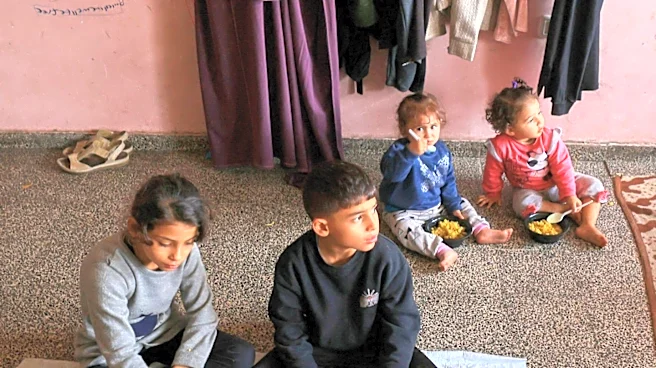
Funding cuts to humanitarian aid have led to the closure of over 100 sites in Afghanistan that were treating children suffering from severe wasting, a dangerous form of malnutrition. Currently, 3.7 million children in Afghanistan are affected by wasting, with
approximately 1 million experiencing life-threatening severe acute cases. Dr. Tajudeen Oyewale, UNICEF Representative in Afghanistan, has issued an urgent appeal for intervention, emphasizing the critical need for early action to save lives. The closures of these treatment centers exacerbate an already dire situation, leaving a significant number of vulnerable children without access to essential medical care and nutritional support. This development underscores the severe impact of reduced humanitarian funding on the health and survival of children in crisis-affected regions.
Why It's Important?
The closure of over 100 malnutrition treatment sites in Afghanistan due to funding cuts represents a critical humanitarian crisis with severe implications for child mortality and long-term health outcomes. The staggering number of children suffering from wasting, particularly the 1 million with severe acute cases, highlights the fragility of health infrastructure in conflict-affected areas. Without adequate funding, these children face an increased risk of death and irreversible developmental damage. This situation also reflects a broader challenge in international humanitarian aid, where funding shortfalls directly translate into a reduction of life-saving services. The appeal from UNICEF underscores the urgent need for sustained and predictable funding to prevent further deterioration of the humanitarian situation and to protect the most vulnerable populations.
What's Next?
The immediate next step involves securing renewed funding to reopen the closed treatment centers and expand access to nutritional support for Afghan children. Dr. Tajudeen Oyewale's appeal aims to mobilize international support and resources to address the critical funding gap. There is a call for a 'humanitarian reset' that would shift resources from crisis management to more proactive, community-led, and sustainable care. This would involve transforming the current aid system to prioritize early intervention and prevention, rather than waiting until children are in life-threatening conditions. The long-term goal is to establish a resilient humanitarian system that can effectively respond to and mitigate the impacts of malnutrition in Afghanistan and similar contexts.
Beyond the Headlines
The crisis in Afghanistan highlights the ethical imperative of global responsibility and the profound impact of geopolitical decisions on vulnerable populations. The funding cuts, while seemingly administrative, have direct and devastating consequences on the lives of millions of children, raising questions about the prioritization of humanitarian aid in international policy. This situation also exposes the systemic vulnerabilities within the global aid architecture, where reliance on fluctuating donor funds can lead to abrupt cessation of critical services. The call for a 'humanitarian reset' suggests a deeper re-evaluation of how aid is structured and delivered, advocating for a more sustainable, preventative, and locally empowered approach to address complex humanitarian challenges.